
As we mentioned in a previous post, after the surrender of the Japanese in 1945, World War II ended but not the oppression. On August 8, 1945, shortly before the Japanese acknowledged defeat, the Soviets declared war on Japan and invaded Manchuria. They were followed a year later by the Chinese Communists.
As Danish author Kirsten Berggreen Buch put it, "[W]hen the Japanese 'pulled out', the first to pour in across the border were Soviet troops, and as they pulled out they were followed by the Eighth Route Army …".
Before long, Manchuria was under the domination of the Chinese Communists. They harassed the Danish missionaries and Chinese Christians in various ways and burdened the hospital at Siuyen by filling it with patients from their army.
By mid-1946, most of the Danish missionaries who had spent the war years in Manchuria were exhausted. D.M.S. called them back to Denmark for a much-needed rest, with the plan to send replacements from among those who had been confined in Denmark. According to Jensen and Pedersen, “The precarious situation made 35 Danish missionaries and 21 children leave China in 1946 followed by more in 1947.”
Due to the political situation, the missionaries’ departure was more in the nature of an escape than an orderly leave on a furlough. Kirsten Berggreen Buch related: “Many dramatic departures took place in 1945-1946. Long day’s walks over the mountains with children, travel in freight cars and so on (exactly as during the Boxer rebellion . . .).”
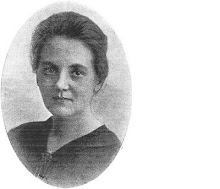
Anna Bøg left Siuyen on May 23, 1946, just 10 days after her 58th birthday. On June 8, 1946, she wrote the letter below from Antung [now called Dandong] to Elise Bahnson in Denmark who was to return soon to Siuyen.
At the end of this post (after the listing of sources), we tell a little about the various persons and places to which Anna Bøg refers unless they are already familiar to our readers from previous posts.
"My dear Lise!Sources:
"I received your letter No. 4 on 12 May, Sunday, at noon, when suddenly Hogsgaard and Gjaerulf Larsen appeared, each of them carrying a heavy backpack. They had walked from Haich’eng, been to Mukden, Tientsin [now called Tianjin] to negotiate travel home and then passed by Siuyen to speed up our leave. United Nations Relief [Association] promised to help us depart from Antung, either by plane or by ship. Last summer I stored most of your belongings. Most of what we have is now in the three rooms upstairs. The rooms below are rented to a Mr. Tung. The whole men’s station is in the hands of the Communists, the school is in Bjergaarde’s house and the Communists live in the other houses. Half of the hospital is also occupied by them, and also Dr. [Niels] Nielsen’s house. [Dr.] Marie [Nielsen], Gudrun and all the nurses live in the old doctor’s house.
"My last image of our wonderful church was of a large people’s meeting, the leader’s picture hung on the Cross, the church full of Communist inscriptions and men forced to sit there for seven days of meetings. Everything on the church square was trampled down. Things were locked up in the loft. They broke in and stole them, among other things the carpet. For a long time the church was used for education purposes, later as a dormitory. The benches were placed outside on the church square and were ruined by the rain. Some of the benches were taken to the theatre. Windows were smashed, et cetera. For a while they lived in the street chapel and held meetings there. Now it is rented to opium smokers and shopkeepers. The whole town is filled with Communists. Many rich people have been robbed of everything. The last 9-10 months have been worse than during the Japanese occupation. How much suffering and tears. Nobody looked happy. First vandalized by the Russians and then by the Communists.
"Sunday 19 May the congregation organized a very beautiful farewell party for Busch and myself. Just about everybody was present and all of us grieved. It was so difficult for me to leave them, especially at this moment. I should have preferred to stay until things settled down a little. For a long time we had prayed that it might be in God’s hour, so we believe it has come.
"A.B. Nielsen, Mrs. Christensen, Busch and I departed 23 May with an open Communist truck. We sat high up on a load of peanuts. The truck broke down all the time. The second day Mrs. Christensen and A.B.N. left the truck and walked to Kushan. Miss Busch is very weak. She would not be able to do that. She and I arrived in Kushan only on the fourth day, with all the luggage ruined by the rain. The last bit Ellen Nielsen’s cart picked us up. We have now been two weeks in Antung.
"Busch and I are staying with the Bertelsens. Tomorrow the intention is that Willers, G. Larsen, Ulf and Aagaard with Helga will put on their backpacks and start their trip home. We all, the Bolwigs included, must wait and see what shows up. The airfield is demolished. When starting we thought we would continue immediately and are carrying only clothes for a plane trip. We are very well off at Dorthe’s [Dorthea Bertelsen's] and are enjoying the rest after the first trip. Busch is also well but has little strength. Our hearts are in Siuyen; we know nothing about how they are. Rumors say there is fighting in there. But now a 15-day cease-fire begins. Can we get out? Your first three letters I have not received. Siuyen has been cut off. . . . The women look forward with pleasure to your arrival, may it happen.
"Best regards from Busch and yours ever. Anna."
Bøg-Madsen, Anna; letter to Elise Bahnson written from Antung, June 8, 1946, from the D.M.S. Archives in the Rigsarkivet. Courtesy of Kirsten Berggreen Buch.
Buch, Kirsten Berggreen; letters to the authors, dated December 8, 1998, March 6, 1999, December 23, 1999, and March 3, 2005.
Dansk Kvindebiografisk Leksikon, biography of Dr. Marie Nielsen.
D.M.S. Missionary Album, 1950.
Jensen, Anne Hviid, I Lys Og Skygge (Unitas Forlag, Copenhagen, 2005), pp. 159-163.
Jensen and Pedersen, "China – A fact-finding visit – April 2002", p. 3.
Gullach-Jensen, Thyra; D.M.S. i Manchuriet, (D.M.S., Copenhagen, 1937), pp. 54-55, 72, 93-94, 113-115.
Image:
Contemporary photograph of Antung, from Wikimedia Commons. Some rights reserved.
All D.M.S. items used with permission.
------------------------------
Persons and places mentioned in the letter:
"Hogsgaard" - Rev. Jens Lind Hogsgaard. Rev. Hogsgaard was born May 4, 1899 in Nørre Nissum by Lemvig. He served in Manchuria from 1929-1947. Beginning in 1931, he was in charge of the work with men in Changchun/ Hsinking. In 1935, he married Anna Oline Meinertsen, another missionary. In 1946, he took over chairmanship of the Manchurian missions from Rev. Neils Buch. Previously he had been deputy chairman
"Gjaerulf Larsen" - Rev. Erik Gjaerulf Larsen. Rev. Larsen was born January 11, 1908, in Helsingør . Until 1934 he was the secretary of K.F.U.M. [Y.M.C.A.] in Aalborg. In 1934, he was sent to Manchuria where he headed K.F.U.M.’s work in Antung. His experiences in Manchuria are related in the book Sol Opstaar og Sol Nedgaar – Manchuriet 1934-1946 [The Sun Rises and the Sun Sets, Manchuria 1934-1946]; (D.M.S., Hellerup, 1989).
"Gudrun" - Gudrun Budtz Christensen, a nurse at Siuyen Hospital.
"Busch" - Anna Busch. Miss Busch was the head nurse at Siuyen Hospital. She has been mentioned in many earlier posts. She had survived typhoid fever. Because she had been seriously ill, she was weak and could not, like the others, put on her backpack and walk across the mountains.
"Mrs. Christensen" - Helga Christensen. Mrs. Christensen was the sister-in-law of Rev. Axel Christensen. She was not a missionary. She had gone to China to keep house for her brother-in-law until his wife could join him, then was prevented from leaving by the onset of World War II.
"A.B. Nielsen" - Anna Bothilde Nielsen. Miss Nielsen was born on May 31, 1899 in Esbjerg. She came to Manchuria in 1928 and in 1930 she was assigned to Suihuafu Hospital where by the mid-1930s she was head nurse. After leaving China, she was transferred to Aden where the D.M.S. had a small mission.
"Kushan" - Takushan (a town south of Siuyen and west of Antung), also known as Gushan, and Dagushan. Takushan means “Great Lonesome Mountain”.
"Ellen Nielsen" - Ellen Nielsen was born July 17, 1871 in Bregninge, Sjaelland. She was a missionary based in Takushan beginning in 1899. She accomplished a large number of missionary works, including the establishment of a nursery school, a girl’s school, a senior high school, a teacher’s college, and a trade school. She became a Chinese citizen, remained in Takushan when the other missionaries left Manchuria, and died there in 1960.
"Bertelsens" - Dr. Peter Bertelsen and his wife Dorothea Bech Andersen. The Bertelsens served in Manchuria from 1931 to 1947, first in Siuyen and then from 1938 onward in Antung.
"Willers" - Rev. and Mrs. Ludvig Willer - For information regarding the Willers see our post The Death of Helga Johansen (October, 1944)
"Ulf" - Ulf was a teenager of 15 or 16. We do not know his surname. Although not a missionary child, he had attended the school for the children of the Danish missionaries in Antung while his father, a businessman, was based in Japan.
"Aagaard with Helga" - Rev. Anders Aagaard Poulsen and his daughter Helga Aagaard Poulsen. Rev. Aagaard Poulsen was born July 16, 1880 in Thorning by Viborg. He and his wife, Margrethe Leth, were sent to Manchuria by the D.M.S. in 1912. They served in Harbin and Pitsaikou, where Rev. Poulsen headed the school for male evangelists. Margrethe Aagaard Poulsen died in Manchuria from typhoid fever in 1944. She had contracted the disease while providing nursing care for Chinese patients. By the time of Anna Bøg's letter, the couple's four oldest children had gone back to Denmark. The youngest, Helga, was still with her father in Manchuria.
"Bolwigs" - Rev. and Mrs. Conrad Bolwig. Conrad Sophus Bolwig was born September 16, 1866 in Nykirke by Vejle. In 1891, he married Minna Gudrun Hass. The Bolwigs were pioneer missionaries who had lived in Takushan since the beginning of the Danish missions in Manchuria. At the time of Anna Bøg's letter, Rev. Bolwig was 80 and Mrs. Bolwig was 79.
"Hogsgaard" - Rev. Jens Lind Hogsgaard. Rev. Hogsgaard was born May 4, 1899 in Nørre Nissum by Lemvig. He served in Manchuria from 1929-1947. Beginning in 1931, he was in charge of the work with men in Changchun/ Hsinking. In 1935, he married Anna Oline Meinertsen, another missionary. In 1946, he took over chairmanship of the Manchurian missions from Rev. Neils Buch. Previously he had been deputy chairman
"Gjaerulf Larsen" - Rev. Erik Gjaerulf Larsen. Rev. Larsen was born January 11, 1908, in Helsingør . Until 1934 he was the secretary of K.F.U.M. [Y.M.C.A.] in Aalborg. In 1934, he was sent to Manchuria where he headed K.F.U.M.’s work in Antung. His experiences in Manchuria are related in the book Sol Opstaar og Sol Nedgaar – Manchuriet 1934-1946 [The Sun Rises and the Sun Sets, Manchuria 1934-1946]; (D.M.S., Hellerup, 1989).
"Gudrun" - Gudrun Budtz Christensen, a nurse at Siuyen Hospital.
"Busch" - Anna Busch. Miss Busch was the head nurse at Siuyen Hospital. She has been mentioned in many earlier posts. She had survived typhoid fever. Because she had been seriously ill, she was weak and could not, like the others, put on her backpack and walk across the mountains.
"Mrs. Christensen" - Helga Christensen. Mrs. Christensen was the sister-in-law of Rev. Axel Christensen. She was not a missionary. She had gone to China to keep house for her brother-in-law until his wife could join him, then was prevented from leaving by the onset of World War II.
"A.B. Nielsen" - Anna Bothilde Nielsen. Miss Nielsen was born on May 31, 1899 in Esbjerg. She came to Manchuria in 1928 and in 1930 she was assigned to Suihuafu Hospital where by the mid-1930s she was head nurse. After leaving China, she was transferred to Aden where the D.M.S. had a small mission.
"Kushan" - Takushan (a town south of Siuyen and west of Antung), also known as Gushan, and Dagushan. Takushan means “Great Lonesome Mountain”.
"Ellen Nielsen" - Ellen Nielsen was born July 17, 1871 in Bregninge, Sjaelland. She was a missionary based in Takushan beginning in 1899. She accomplished a large number of missionary works, including the establishment of a nursery school, a girl’s school, a senior high school, a teacher’s college, and a trade school. She became a Chinese citizen, remained in Takushan when the other missionaries left Manchuria, and died there in 1960.
"Bertelsens" - Dr. Peter Bertelsen and his wife Dorothea Bech Andersen. The Bertelsens served in Manchuria from 1931 to 1947, first in Siuyen and then from 1938 onward in Antung.
"Willers" - Rev. and Mrs. Ludvig Willer - For information regarding the Willers see our post The Death of Helga Johansen (October, 1944)
"Ulf" - Ulf was a teenager of 15 or 16. We do not know his surname. Although not a missionary child, he had attended the school for the children of the Danish missionaries in Antung while his father, a businessman, was based in Japan.
"Aagaard with Helga" - Rev. Anders Aagaard Poulsen and his daughter Helga Aagaard Poulsen. Rev. Aagaard Poulsen was born July 16, 1880 in Thorning by Viborg. He and his wife, Margrethe Leth, were sent to Manchuria by the D.M.S. in 1912. They served in Harbin and Pitsaikou, where Rev. Poulsen headed the school for male evangelists. Margrethe Aagaard Poulsen died in Manchuria from typhoid fever in 1944. She had contracted the disease while providing nursing care for Chinese patients. By the time of Anna Bøg's letter, the couple's four oldest children had gone back to Denmark. The youngest, Helga, was still with her father in Manchuria.
"Bolwigs" - Rev. and Mrs. Conrad Bolwig. Conrad Sophus Bolwig was born September 16, 1866 in Nykirke by Vejle. In 1891, he married Minna Gudrun Hass. The Bolwigs were pioneer missionaries who had lived in Takushan since the beginning of the Danish missions in Manchuria. At the time of Anna Bøg's letter, Rev. Bolwig was 80 and Mrs. Bolwig was 79.


