Showing posts with label REV. CH'ENG CHAN YUAN. Show all posts

Monday, March 8, 2010

The 'Old Mushih' and the Other Ministers in Siuyen (1898-1939)


In the last two posts, we mentioned pastoral visits to Siuyen by Rev. Ch'eng in October, 1936, and by Rev. Bolwig during Christmas, 1936. These visits were particularly important to the Siuyen congregation because Rev. Bjergaarde had been back in Denmark on leave since June of 1936 and the congregation had been without the sacraments for the entire time, except during those visits.

In the D.M.S. annual report for the fiscal year 1936-1937, Elise Bahnson wrote that during the past year the worship services had been well attended. Since they had not yet been permitted to rebuild the church, they were holding the services at the school. After Rev. Bjergaarde left, however, they had only been able to receive Communion twice -- that is, during the visits by Rev. Ch'eng and Rev. Bolwig. The male evangelists had preached, and Dr. Nielsen had preached once a month after his return in October. And, all of the evangelistic work (Sunday school, Bible studies, hospital devotions, home visits, and so on) had been carried on as usual by the women missionaries, male evangelists, and Bible Women.

In view of the foregoing, this seems a good time to provide some details about the ministers in Siuyen over the years:

Rev. Ole Olesen and Rev. Johannes Vyff, established the mission in Siuyen in 1898. In August, 1898, they purchased a Chinese house and lot enclosed by a tall wall and the two ministers and their wives took up residence there. They opened a street chapel and began holding services that were soon well attended.

There was an interruption during the Boxer Rebellion in 1900 when the Olesens and Vyffs were forced to go to Port Arthur for several months. Apparently, it was after this that Rev. Olesen took sole charge of the work in Siuyen and remained in charge until he left in 1923, the year after he supervised the building of the church.

Rev. Olesen's full name was Ole Peter Svenning Olesen. Altogether, he served in Manchuria from 1896-1927. Rev. Olesen's first wife was Magdalene Sørensen. It was she who began the work with the women in Siuyen that Anna Bøg took over.

On September 25, 1921, there was a big celebration in Siuyen for the Olesens' silver wedding. It was a "triple feast" because they were also commemorating Rev. Olesen's 25th anniversary as a minister and as a missionary to China. Anna Bøg and nurse Anna Busch organized the celebration while the Chinese Christians decorated the yard and chapel as beautifully as they knew how. Not the least of the joy came when Rev. Bolwig arrived. He had cycled all the way from Takushan for the occasion.

Sadly, Magdalene Olesen died only a few months later, on January 13, 1922. In 1923, Rev. Olesen was transferred to Fengcheng and remarried. His second wife, Marie Thomsen, died in 1926, and he returned to Denmark in 1927.

Rev. Hagelskjær succeeded Rev. Olesen in Siuyen, serving there until September, 1929. His full name was Laust Lauridsen Hagelskjær. Altogether, he worked in Manchuria from 1909-1930. He was married to Jacobine C.C. Larsen.

There was no immediate successor to Rev. Hagelskjær in Siuyen. In a short article by Anna Bøg written in early 1930, she related:
"There was a large empty spot in the congregation here when the minister left and no substitute could be found. The congregation very much hopes that the Hagelskjærs will come back. The chairman [of the parish council] said to me the other day, 'Here in Siuyen we cannot do without a missionary minister yet. There should be both a Danish and a Chinese minister. But now there are neither.' The chairman also asked me if I thought the old Mushih could come out for a year's time. He meant Rev. Olesen."
("Mushih" is a term the Chinese used to refer to ordained Christian ministers. It apparently derives from the Hebrew verb for "to anoint", which is "mashach".)

The congregation in Siuyen was without a minister until late 1931. Our readers might remember that in our post entitled Difficulties to Overcome (1931-1932) we quoted from articles by Elise Bahnson where she talked about how the congregation had been without a minister for two years and hoped for one soon. The construction of the women missionary's residence had been delayed so that she could build a home for the minister they expected to come.

In late 1931, Rev. Jens P. Bjergaarde arrived and took up residence in the home Elise Bahnson had prepared for him and his family. Rev. Bjergaarde was married to Maria Kruse. Altogether, Rev. Bjergaarde served in Manchuria from 1912 to 1939 and Maria from 1915 to 1939.

Here is what Gullach-Jensen had to say about the Bjergaardes in her 1937 book on the work of D.M.S. in Manchuria:
"[Rev. Bjergaarde] was born March 14, 1881 in Brovst Parish. His father was a farmer. Until his confirmation, Bjergaarde lived at home, of which he has many good and bright memories.

"He would have liked to study, but it could not be afforded so he was placed in a commercial apprenticeship. As a shop assistant in Vendsyssel, he came into close contact with believing people for the first time and that touched a spiritual longing that had slumbered in him since his school days. He awoke to new life and came into a conscious relationship with Jesus Christ.

"Almost simultaneously, the idea of serving in the mission field presented itself but his obligations to his family prevented him from pursuing it for another five years. In 1907, he began to educate himself with an eye on the mission field, first at Norre Nissum Seminary, next at the Mission School in Hellerup, and finally during a term of study in England. Resources for his training and travel came from believers who were merchants in Vendsyssel and Han Herred. In 1912, D.M.S. sent Rev. Bjergaarde out as a missionary to China. He has worked at various stations and since 1931 he has been in Siuyen.

"In 1920, Bjergaarde married Marie Kruse, who since 1915 had been a D.M.S. Missionary in Chinchou."
As mentioned above, the Bjergaardes went home to Denmark in June, 1936. As far as we can tell, they came back to Siuyen after this home leave and remained in Siuyen until 1939.

From 1939 onward, there was no minister in Siuyen during Anna Bøg's time. In fact, during World War II, Anna Bøg was the only remaining missionary at the mission station, although there were still medical missionaries at Siuyen Hospital outside town.

When Anna Bøg returned to Denmark in late 1946, she carried with her a letter in Chinese from a representative of the Chinese congregation in Siuyen addressed to the congregation in Denmark. It may or may not have been from the same man who years earlier had hoped Rev. Olesen could return. He used the Chinese nicknames for the Danes he referred to. We know from Kirsten Berggreen Buch that "Ma" was the Chinese nickname for Anna Bøg Madsen (based on the similarity in sound to the first syllable of Madsen) and that "Yang" referred to nurse Anna Busch (because of the first syllable of her first name). We do not know whom he meant by "Rev. Shao" but we believe that by "Rev. Yuan" he must have been referring to Rev. Jens Bjergaarde, since as far as we know he was the last Danish minister in Siuyen. (Perhaps "Yuan" sounds like "Jens" to the Chinese.) Here is the letter:
"Since Rev. Yuan left Siuyen . . . We have for years not been able to find a pastor for our flock, God's sheep. Everything has developed into such a difficult situation!

"We now send greetings to everyone in the congregation and to Rev. Yuan at the same time, as the missionaries Ma and Yang are now going back to Denmark.

"Our profound wish is that Rev. Yuan would return to Siuyen. If he cannot come back, we shall certain also wish Rev. Shao a heartfelt welcome. If that minister cannot come here either, then the Lord must help us to find another suitable pastor.

"Missionary Ma will certainly tell you about our situation."
When we reach the year 1946 in these posts, it will become much clearer to our readers what this faithful Chinese Christian meant by the phrase, "Everything has developed into such a difficult situation". That was an understatement. It was a very difficult situation indeed.

Sources:
Bog-Madsen, Anna; "Et Sølvbryllup i Hsiu-yen", Dansk Missionsblad, Vol. 89, Nr. 4, January 25, 1922, pp. 38-40.
Bog-Madsen, Anna; "Fra Missionærerne i China," Dansk Missionsblad, Vol. 97, Nr. 14, April 9, 1930; p. 214. Translated by Marie-Jacqueline.
Bahnson, Elise; "Beretning fra Frkn. Bahnson og Bøg Madsen," D.M.S. Aarsberetning for 1936-1937, p. 131-132.
Gullach-Jensen, Thyra; D.M.S. i Manchuriet (D.M.S., Copenhagen, 1937), pp. 32-33. Translated by Marie-Jacqueline.
Hviid Jensen, Anne; I Lys Og Skygge (Unitas Forlag, Copenhagen, 2005), pp. 159-163.)
Representative of the Siuyen Congregation, letter to the Danish congregation; May 18, 1946. Translated from Chinese to Danish by Kirsten Berggreen Buch and from Danish to English by Preben Jørgensen.
Vyff website, "Ophold i Siu-yen"

Images:
Top - Rev. and Mrs. Olesen visiting Siuyen Hospital in Chinese cart, from D.M.S. Aarsberetning for 1921, p. 141.
Center - Rev. and Mrs. Jens Bjergaarde and family from one of the Danish Missionary Albums
Bottom - Letter from representative of the Siuyen Congregation to the Danish congregation, dated May 18, 1946. (From the D.M.S. archives in the Rigsarkivet.)
All D.M.S. items used with permission.

Monday, March 1, 2010

Bookseller Hsü and Chang Wen Ch'ing (Early 1937)


In early 1937, the D.M.S. missionary newspaper published a vignette by Anna Bøg about Bookseller Hsü, an itinerant salesman who sold separate books of the Bible in the countryside around Siuyen. Our readers might remember that Elise Bahnson introduced Mr. Hsü in one of the articles excerpted in our post Difficulties to Overcome (1931-1932).

In the early 1937 newspaper, there was also a vignette by Elise Bahnson about Mrs. Chang, an elderly Chinese woman who had recently been baptized, and Elise Bahnson reported that, thanks to the new motor coach line, Rev. and Mrs. Bolwig had been able to travel to Siuyen from the town where they lived in order to spend Christmas with the missionaries and Chinese congregation. The Bolwigs had many friends among the Chinese Christians in Siuyen.

Here are the two vignettes:
Bookseller Hsü

"Bookseller Hsü has just returned from a trip of a little over two months during which he sold 4,700 individual books of the Bible. Not all homes could pay with cash, but they were willing to trade a bowl of corn for a little book.

"To the question, 'Are you sure they will now read in the books?', he replied, 'I find some parts that I know they would like to read and mark them, because if they begin with Jesus' genealogy they might easily stop there.'

"He had spent a week in the home of a schoolteacher who has previously been a patient at the hospital [in Siuyen]. Food was not so difficult to come by in the country dwellings, but a couple of times it was 1 o'clock in the morning before he found his night's lodging.

"He experienced many answered prayers, spoke with many about God's Word, and witnessed [to them]. If there were sick people in the home, he talked with them and prayed for them. . . .

"On such a trip, one cannot escape a chance encounter with a troop of brethren who live in the mountains [bandits]. But, despite the winter cold, snow, and many other difficulties, the bookseller returned fresh, happy, and empty-handed, having left behind the many books."
Chang Wen Ch'ing

"A truth-seeking soul, eagerly she had served Buddha and other gods for many years. She had abstained from meat with the intention of honoring the gods.

"Now 75 years old, she came with her daughter to the worship service during the month of October, the first Sunday Reverend Cheng was here. During the entire week [of women's meetings] she sat in the first pew, listening. She had reached her destination; she had finally found the truth.

"She lived here in those days, and started to eat meat again, an important sign that she had begun to break away from idols to serve the living God. She was full of questions. Even though she was advanced in age and she could not learn to read, she could go home and do away with all the idols. We told her about Christmas and invited her to come back.

"She came at the appointed time, worn out and motion-sick from riding on the rigid cart. During Christmas, she lived here again in order to be with us as much as possible, and her hope was fulfilled: the Sunday between Christmas and New Years, she was baptized 'Chang Wen Ch'ing'.

"For three weeks, she lived with her daughter and came for further instruction. Now she is back home in the country."
Source:
Bøg-Madsen, Anna; "Smaabreve fra Siuyen - Bogsælgeren," and Bahnson, Elise; "Smaabreve fra Siuyen - Gamle Fru Chang"; Dansk Missionsblad, Vol. 104, No. 9; 1937 (exact date unknown); pp. 127-129. Translation by Marie-Jacqueline.

Image:
Photograph of Mrs. Chang (front), Bible Woman Miss P'ei, and Anna Bøg, from the article cited above.
All D.M.S. items used with permission.

Monday, February 22, 2010

The Nielsens Return; Reverend Ch'eng Visits (Late 1936)


In an article published in the Danish missionary newspaper in late 1936, Anna Bøg related that the long-anticipated government-sponsored long-distance motor coach line had finally opened. It connected Siuyen with Ta-shih-chiao [Dashiqiao], a stop on the main line of the South Manchurian Railway 25 kilometers southwest of Haicheng (the closest passenger station to Siuyen). As a result, the missionaries in Siuyen were no longer as isolated as we described in our post Landlocked (Early 1936).

Missionaries from other locations in Manchuria had taken the new bus to Siuyen and some of the missionaries had by then discovered Sorai Beach in Korea as a vacation spot. Although they now had the means to join them, Anna Bøg and Elise Bahnson had concluded it was God's will for them to remain in Siuyen that year.

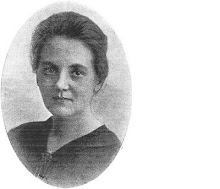
The high points of the latter part of the year had both occurred in October. Dr. and Mrs. Nielsen had returned to Siuyen after the three-year furlough that followed Dr. Nielsen's release from captivity by the bandits. And, Reverend Ch'eng Chan Yuan, a Lutheran minister ordained in 1934, had traveled by bicycle to Siuyen all the way from Lin-chiang, northeast of Siuyen on the Manchurian side of the Yalu River that divides Manchuria from Korea:
"It was a great joy when the new bus route opened July 2 between Ta-shih-ch'iao and Siuyen. It is a stretch of 150 kilometers. There are eight villages along the route where the bus stops. It costs five cents per kilometer and $5.25 for the entire trip. Those who have tried it are all very excited about the wonderful nature scenery, especially about one of the mountain passes, which is very beautiful. Now we no longer feel as confined as we have during recent years.

"Miss Bahnson and I talked about also trying out the route and taking off for summer holidays to be with our colleagues at the beautiful beach in Korea. We prayed for God's guidance and saw several reasons why we should stay home. The same day we made that decision, we, together with all our co-workers, the evangelists and Bible Women, began to study Japanese with a very nice young Manchurian as a teacher. He is an interpreter. We studied five times a week.

"Several times, our co-workers wanted to give up as they were not accustomed to studying languages other than their own, but now they have come so far as to enjoy it. Some of them are really adept. And we find it very amusing when we get visits [from Japanese officials] because we can understand a little of what they say.

"One afternoon a senior official was here on a visit. As it was approaching the time when we were going to study, I asked him if he wanted to teach us. 'Yes,' he was more than willing. Another day, the dean of the Japanese school listened to us and corrected us. The same young man has come to our worship service several times and on Sunday morning comes into my Bible class to sing for the women.

"The Manchurians have been able to come and go, but for several years no missionaries have visited here. Rev. Witt was the first to try the bus route. . . . After that, Miss Bech-Andersen was here. And now it is ten days since we had the very great pleasure of welcoming Dr. and Mrs. Nielsen home. We were eating our midday meal when old Yang stuck his head in the door and said, 'Dr. Nielsen has arrived!' We got up from the table, got on our bicycles, and minutes later were at the bus station where the two oldsters, as we call them here, were standing happy and excited among all the suitcases. The news traveled rapidly all over town, and a group of Christians was on the way over to welcome them home. It was exactly three years previously that Dr. Nielsen came home from the mountains, and almost three years since they left Siuyen. In God's time, doors open and what God unlocks, no one can lock in.

"At the same time, we were also visited by the young Reverend Ch'eng from Lin-chiang. It had been about two and a half years since we'd had a visit from any outside minister and we had not expected that he would be the first to come. We had received a card, "Reverend Ch'eng will come the 15th of October," but not from where he would come, or how he could come. The evangelists arrived by bus, but no minister. A little later, he came by bicycle from Takushan. He had cycled the entire way from Lin-chiang to Siuyen, approximately 67 Danish miles, on unlevel roads through mountain passes and across rivers, sometimes in Korea and sometimes on the Manchurian side, stopping at outstations and Christian homes along the way and the entire time testifying about his Master and Lord. Spontaneously, people said, 'I wish there were many like Reverend Ch'eng.' . . .

"Reverend Ch'eng immediately put himself at our service. 'I will work for you all, so you can rest a little,' he said. He was with us for ten days, held seventeen meetings, two large Communion services, a baptism, and a wedding. One morning, he cycled out to Hsing-lung-kuo, where he spoke to the Christians. The last two days he was at the hospital, where he held four meetings and took old Mrs. Fu to Communion.

"We had meetings for the women every morning and for the men every afternoon. For reasons of space, we limited our invitations to the Christians and catechumens. Every morning, we were overcrowded, so we put extra benches out in the sunny yard and with the windows open one could hear well. He was used by the Lord for blessing. He clarified many issues that we all have to face in these uncertain times. Some of the catechumens received so much help that they were very sad when the meetings were over and we could no longer keep the minister here.

"One day he asked about the outstations and we understood that the minister was also willing to travel to the only place open in our district in these times, Shao-tzu-ho. When a Christian from there, Mr. Liu, who had come here to attend the meetings, heard this, he immediately went back to tell the Christians about this unexpected joy. They are all rural residents and had to arrange their work so they could attend. Tuesday a small cart drove off with two men and two Bible Women. Most of the approximately four Danish miles of the road [to Shao-tzu-ho] consist of four long mountain passes. Wednesday morning, Reverend Ch'eng and evangelist Chang left by bicycle.

"They had four days of meetings with Communion services. We were very pleased about the glorious autumn weather, which helped everyone to attend. Also, we were glad that all the Christians could assemble in their own little outstation for Communion. It has been many years since they could do that. All those who were baptized from Shao-Tzu-ho last Christmas and Pentecost said, 'We are the fruit of Mr. Liu'. . . How glad we were when this little band came at Pentecost and asked for baptism.

"Here at home in Siuyen we are all very busy. There are 63 women on the catechumens' list and 25 schoolgirls. With all the weekly Bible studies, devotions, prayer meetings, Sunday school and home visits, we can say that we are fully occupied.

"And in all circumstances, we can attest to experiencing Jesus' promise, 'Behold, I am with you all days.' "
Source for article:
Bøg-Madsen, Anna; "Siuyen," Dansk Missionsblad, Vol. 103, No. 50, 1936 (exact date unknown), pp. 741-744. Translation by Marie-Jacqueline.

Source for additional information regarding Rev. Ch'eng:
Jensen, Anne Hviid; I Lys Og Skygge (Unitas Forlag, Copenhagen, 2005), p. 111.

Image:
Photograph of Rev. Ch'eng during his 1936 visit to Siuyen, from Bøg-Madsen, Anna; "Smaabreve fra Siuyen, Bogsælgeren," Dansk Missionsblad, Vol. 104, No. 9, 1937 (exact date unknown); p. 128.
All D.M.S. items used with permission.