
In an article published in the Danish missionary newspaper in late 1936, Anna Bøg related that the long-anticipated government-sponsored long-distance motor coach line had finally opened. It connected Siuyen with Ta-shih-chiao [Dashiqiao], a stop on the main line of the South Manchurian Railway 25 kilometers southwest of Haicheng (the closest passenger station to Siuyen). As a result, the missionaries in Siuyen were no longer as isolated as we described in our post Landlocked (Early 1936).
Missionaries from other locations in Manchuria had taken the new bus to Siuyen and some of the missionaries had by then discovered Sorai Beach in Korea as a vacation spot. Although they now had the means to join them, Anna Bøg and Elise Bahnson had concluded it was God's will for them to remain in Siuyen that year.
The high points of the latter part of the year had both occurred in October. Dr. and Mrs. Nielsen had returned to Siuyen after the three-year furlough that followed Dr. Nielsen's release from captivity by the bandits. And, Reverend Ch'eng Chan Yuan, a Lutheran minister ordained in 1934, had traveled by bicycle to Siuyen all the way from Lin-chiang, northeast of Siuyen on the Manchurian side of the Yalu River that divides Manchuria from Korea:
"It was a great joy when the new bus route opened July 2 between Ta-shih-ch'iao and Siuyen. It is a stretch of 150 kilometers. There are eight villages along the route where the bus stops. It costs five cents per kilometer and $5.25 for the entire trip. Those who have tried it are all very excited about the wonderful nature scenery, especially about one of the mountain passes, which is very beautiful. Now we no longer feel as confined as we have during recent years.Source for article:
"Miss Bahnson and I talked about also trying out the route and taking off for summer holidays to be with our colleagues at the beautiful beach in Korea. We prayed for God's guidance and saw several reasons why we should stay home. The same day we made that decision, we, together with all our co-workers, the evangelists and Bible Women, began to study Japanese with a very nice young Manchurian as a teacher. He is an interpreter. We studied five times a week.
"Several times, our co-workers wanted to give up as they were not accustomed to studying languages other than their own, but now they have come so far as to enjoy it. Some of them are really adept. And we find it very amusing when we get visits [from Japanese officials] because we can understand a little of what they say.
"One afternoon a senior official was here on a visit. As it was approaching the time when we were going to study, I asked him if he wanted to teach us. 'Yes,' he was more than willing. Another day, the dean of the Japanese school listened to us and corrected us. The same young man has come to our worship service several times and on Sunday morning comes into my Bible class to sing for the women.
"The Manchurians have been able to come and go, but for several years no missionaries have visited here. Rev. Witt was the first to try the bus route. . . . After that, Miss Bech-Andersen was here. And now it is ten days since we had the very great pleasure of welcoming Dr. and Mrs. Nielsen home. We were eating our midday meal when old Yang stuck his head in the door and said, 'Dr. Nielsen has arrived!' We got up from the table, got on our bicycles, and minutes later were at the bus station where the two oldsters, as we call them here, were standing happy and excited among all the suitcases. The news traveled rapidly all over town, and a group of Christians was on the way over to welcome them home. It was exactly three years previously that Dr. Nielsen came home from the mountains, and almost three years since they left Siuyen. In God's time, doors open and what God unlocks, no one can lock in.
"At the same time, we were also visited by the young Reverend Ch'eng from Lin-chiang. It had been about two and a half years since we'd had a visit from any outside minister and we had not expected that he would be the first to come. We had received a card, "Reverend Ch'eng will come the 15th of October," but not from where he would come, or how he could come. The evangelists arrived by bus, but no minister. A little later, he came by bicycle from Takushan. He had cycled the entire way from Lin-chiang to Siuyen, approximately 67 Danish miles, on unlevel roads through mountain passes and across rivers, sometimes in Korea and sometimes on the Manchurian side, stopping at outstations and Christian homes along the way and the entire time testifying about his Master and Lord. Spontaneously, people said, 'I wish there were many like Reverend Ch'eng.' . . .
"Reverend Ch'eng immediately put himself at our service. 'I will work for you all, so you can rest a little,' he said. He was with us for ten days, held seventeen meetings, two large Communion services, a baptism, and a wedding. One morning, he cycled out to Hsing-lung-kuo, where he spoke to the Christians. The last two days he was at the hospital, where he held four meetings and took old Mrs. Fu to Communion.
"We had meetings for the women every morning and for the men every afternoon. For reasons of space, we limited our invitations to the Christians and catechumens. Every morning, we were overcrowded, so we put extra benches out in the sunny yard and with the windows open one could hear well. He was used by the Lord for blessing. He clarified many issues that we all have to face in these uncertain times. Some of the catechumens received so much help that they were very sad when the meetings were over and we could no longer keep the minister here.
"One day he asked about the outstations and we understood that the minister was also willing to travel to the only place open in our district in these times, Shao-tzu-ho. When a Christian from there, Mr. Liu, who had come here to attend the meetings, heard this, he immediately went back to tell the Christians about this unexpected joy. They are all rural residents and had to arrange their work so they could attend. Tuesday a small cart drove off with two men and two Bible Women. Most of the approximately four Danish miles of the road [to Shao-tzu-ho] consist of four long mountain passes. Wednesday morning, Reverend Ch'eng and evangelist Chang left by bicycle.
"They had four days of meetings with Communion services. We were very pleased about the glorious autumn weather, which helped everyone to attend. Also, we were glad that all the Christians could assemble in their own little outstation for Communion. It has been many years since they could do that. All those who were baptized from Shao-Tzu-ho last Christmas and Pentecost said, 'We are the fruit of Mr. Liu'. . . How glad we were when this little band came at Pentecost and asked for baptism.
"Here at home in Siuyen we are all very busy. There are 63 women on the catechumens' list and 25 schoolgirls. With all the weekly Bible studies, devotions, prayer meetings, Sunday school and home visits, we can say that we are fully occupied.
"And in all circumstances, we can attest to experiencing Jesus' promise, 'Behold, I am with you all days.' "
Bøg-Madsen, Anna; "Siuyen," Dansk Missionsblad, Vol. 103, No. 50, 1936 (exact date unknown), pp. 741-744. Translation by Marie-Jacqueline.
Source for additional information regarding Rev. Ch'eng:
Jensen, Anne Hviid; I Lys Og Skygge (Unitas Forlag, Copenhagen, 2005), p. 111.
Image:
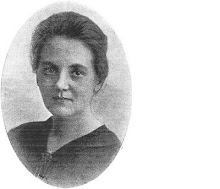
Photograph of Rev. Ch'eng during his 1936 visit to Siuyen, from Bøg-Madsen, Anna; "Smaabreve fra Siuyen, Bogsælgeren," Dansk Missionsblad, Vol. 104, No. 9, 1937 (exact date unknown); p. 128.
All D.M.S. items used with permission.

