Showing posts with label DR. NIELS NIELSEN. Show all posts

Tuesday, April 20, 2010

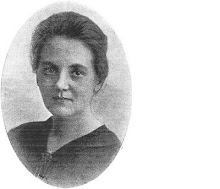
Dr. Marie Nielsen Takes Charge of Siuyen Hospital (Early 1941)


As a result of the forced departure from Siuyen of Dr. and Mrs. Niels Nielsen in 1941, Dr. Marie Nielsen was transferred from Antung (now Dandong) to Siuyen to take charge of the mission hospital. We will refer to her as "Dr. Marie", since that is how the missionaries referred to her, and doing so helps distinguish her from Dr. Niels Nielsen.

Karen Marie Nielsen was born April 29, 1894. According to D.M.S. publications, she was born in Nidløse. According to a secondary source, she was born in the village of Stenlille near Skuerup, which is on Zealand, the same Danish island on which Copenhagen is located.

According to the secondary source, Marie's parents were Kristen Nielsen, a farmer, and Mathilde Michaelsen, who were involved in the Indre Mission movement, a pietistic Lutheran sect founded in Stenlille in 1861. The secondary source says Marie grew up in Holbæk, which is also on Zealand.

At the age of 18, Marie felt called to be a missionary. In 1919, she graduated from Haslev High School -- the same folk high school from which Anna Bøg had graduated ten years earlier. In 1927, Marie obtained her medical degree at the University of Copenhagen after which she spent a short time in Scotland and England.

In November, 1927, the D.M.S. sent Dr. Marie to Manchuria. She traveled to China by ship together with Anna Bøg during the latter's return from her 1926-1927 fundraising furlough.

By 1932, a separate women’s hospital was completed at Antung and Dr. Marie was put in charge, overseeing a Chinese doctor (Dr. Pi) and a Danish nurse (Andrea Nielsen).

From May 1934 until August 1935, Dr. Marie was in Denmark on home leave (furlough), then returned to Antung.

After her 1941 transfer to Siuyen, Dr. Marie labored there throughout the remainder of the Japanese occupation and Second World War.

In 1944, there was a typhoid outbreak. The Japanese required Siuyen hospital to treat typhoid patients from a nearby forced-labor camp, in spite of the danger to the ordinary patients. Both patients and staff caught the disease, which spread throughout the hospital. Dr. Marie was in charge of the disinfections as well as the medical care. The conditions were desperate because of inadequate food and drug supplies. Dr. Marie contracted the disease but survived.

After the end of World War II, no replacement for Dr. Marie could be found, so she remained in Siuyen. In 1945 the Russians came into Manchuria and a year later the Chinese communists. The communists burdened Siuyen Hospital by filling it with patients from the army. Dr. Marie worked seven days a week under increasingly chaotic conditions.

In 1947, Dr. Marie was able to return to the hospital in Antung where she remained, despite harassment by the communists, until 1951. The communists demanded free treatment, used the hospital as a base for political indoctrination, maligned and harassed the missionaries, and even imprisoned several of them.

After returning to Denmark in 1951, Dr. Marie left again in 1952 for Tanzania where she served in two mission hospitals. She contracted malaria, returned to Denmark in 1959, and died in Copenhagen on September 19, 1968.

Primary sources:
D.M.S. Missionary Album
Gullach-Jensen, Thyra; D.M.S. i Manchuriet; (D.M.S., Copenhagen, 1937), pp. 62-65.

Secondary source:
Nielsen, Estrid; "Marie Nielsen", Dansk Kvindebiografisk Leksikon (online). (Additional commentary about Dr. Marie is available at the linked website.)

Image:
Photograph of Dr. Marie Nielsen from one of the D.M.S. missionary albums, courtesy of Kirsten Berggreen Buch.
All D.M.S. items used with permission.

Tuesday, April 13, 2010

Farewell to the Nielsens (Early 1941)


Even prior to Japan's attack on Pearl Harbor on December 7, 1941, hostilities between the United States and Japan were such that the missionaries who were American citizens had to leave Manchuria. This included Dr. and Mrs. Niels Nielsen who, though Danish-born, had become Americans.

In a letter to the D.M.S. dated February 17, 1941, that was published in the missionary newspaper in April, 1941, Anna Bøg wrote of the Nielsen's departure:
"After 32 years of service, Dr. and Mrs. Nielsen are breaking away from D.M.S.'s Mission Hospital in Siuyen. It is not easy to have one's roots pulled up after working and living in one place for so many years.

"When the local people speak of Dr. Nielsen, they call him, 'Merciful doctor'. Or they say, 'He has saved countless human lives.' Or, 'He practiced true charity.'

"How sad it is to see the old pioneers break away. They belong with the place and people.

"It was typical of Dr. and Mrs. Nielsen that they continued their work until the day before their departure. They have always been diligent and took good care of the hospital. They helped each other and supported each other. Their home has always been harmonious.

"At the congregation's farewell party, many good and warm words were said to them by representatives of the congregation council, the congregation, and the co-workers [evangelists and Bible Women]. When there was an opportunity for anyone to speak, women and men stood up and thanked Dr. and Mrs. Nielsen for what they had been to them.

"We will long remember Dr. Nielsen's farewell speech: 'A farmer took all his savings to purchase wheat and sowed his field. And then came Winter and laid his icy hand and a thick layer of snow over the field. The farmer was about to lose heart and was afraid that all was lost. But one early spring day, his little son came running and said, "Father! The field is full of green sprouts!"'

"In 1939, we took leave of Miss Bahnson; in 1940, of Dr. and Mrs. Asschenfeldt; and now Dr. and Mrs. Nielsen. And there is no one yet to fill all the empty places. Of the relatively strong missionary staff we have always had here in Siuyen, we are now only three single women."*
Source:
Bøg-Madsen, Anna; "Afsked med Siuyen," Dansk Missionsblad, Vol. 108, Nr. 15, April 11, 1941; pp. 196-197.

Image:
Dr. and Mrs. Nielsen on Manchurian cart. From the Nielsen estate, courtesy of Mike from Monterey.
--------------------------
*When Anna Bog said, "We are now only three single woman", the other two must have been Dr. Marie Nielsen and Nurse Anna Busch at Siuyen Hospital. Next week's post will be about Dr. Marie Nielsen, who took charge of Siuyen Hospital when the Nielsens left.

Monday, March 8, 2010

The 'Old Mushih' and the Other Ministers in Siuyen (1898-1939)


In the last two posts, we mentioned pastoral visits to Siuyen by Rev. Ch'eng in October, 1936, and by Rev. Bolwig during Christmas, 1936. These visits were particularly important to the Siuyen congregation because Rev. Bjergaarde had been back in Denmark on leave since June of 1936 and the congregation had been without the sacraments for the entire time, except during those visits.

In the D.M.S. annual report for the fiscal year 1936-1937, Elise Bahnson wrote that during the past year the worship services had been well attended. Since they had not yet been permitted to rebuild the church, they were holding the services at the school. After Rev. Bjergaarde left, however, they had only been able to receive Communion twice -- that is, during the visits by Rev. Ch'eng and Rev. Bolwig. The male evangelists had preached, and Dr. Nielsen had preached once a month after his return in October. And, all of the evangelistic work (Sunday school, Bible studies, hospital devotions, home visits, and so on) had been carried on as usual by the women missionaries, male evangelists, and Bible Women.

In view of the foregoing, this seems a good time to provide some details about the ministers in Siuyen over the years:

Rev. Ole Olesen and Rev. Johannes Vyff, established the mission in Siuyen in 1898. In August, 1898, they purchased a Chinese house and lot enclosed by a tall wall and the two ministers and their wives took up residence there. They opened a street chapel and began holding services that were soon well attended.

There was an interruption during the Boxer Rebellion in 1900 when the Olesens and Vyffs were forced to go to Port Arthur for several months. Apparently, it was after this that Rev. Olesen took sole charge of the work in Siuyen and remained in charge until he left in 1923, the year after he supervised the building of the church.

Rev. Olesen's full name was Ole Peter Svenning Olesen. Altogether, he served in Manchuria from 1896-1927. Rev. Olesen's first wife was Magdalene Sørensen. It was she who began the work with the women in Siuyen that Anna Bøg took over.

On September 25, 1921, there was a big celebration in Siuyen for the Olesens' silver wedding. It was a "triple feast" because they were also commemorating Rev. Olesen's 25th anniversary as a minister and as a missionary to China. Anna Bøg and nurse Anna Busch organized the celebration while the Chinese Christians decorated the yard and chapel as beautifully as they knew how. Not the least of the joy came when Rev. Bolwig arrived. He had cycled all the way from Takushan for the occasion.

Sadly, Magdalene Olesen died only a few months later, on January 13, 1922. In 1923, Rev. Olesen was transferred to Fengcheng and remarried. His second wife, Marie Thomsen, died in 1926, and he returned to Denmark in 1927.

Rev. Hagelskjær succeeded Rev. Olesen in Siuyen, serving there until September, 1929. His full name was Laust Lauridsen Hagelskjær. Altogether, he worked in Manchuria from 1909-1930. He was married to Jacobine C.C. Larsen.

There was no immediate successor to Rev. Hagelskjær in Siuyen. In a short article by Anna Bøg written in early 1930, she related:
"There was a large empty spot in the congregation here when the minister left and no substitute could be found. The congregation very much hopes that the Hagelskjærs will come back. The chairman [of the parish council] said to me the other day, 'Here in Siuyen we cannot do without a missionary minister yet. There should be both a Danish and a Chinese minister. But now there are neither.' The chairman also asked me if I thought the old Mushih could come out for a year's time. He meant Rev. Olesen."
("Mushih" is a term the Chinese used to refer to ordained Christian ministers. It apparently derives from the Hebrew verb for "to anoint", which is "mashach".)

The congregation in Siuyen was without a minister until late 1931. Our readers might remember that in our post entitled Difficulties to Overcome (1931-1932) we quoted from articles by Elise Bahnson where she talked about how the congregation had been without a minister for two years and hoped for one soon. The construction of the women missionary's residence had been delayed so that she could build a home for the minister they expected to come.

In late 1931, Rev. Jens P. Bjergaarde arrived and took up residence in the home Elise Bahnson had prepared for him and his family. Rev. Bjergaarde was married to Maria Kruse. Altogether, Rev. Bjergaarde served in Manchuria from 1912 to 1939 and Maria from 1915 to 1939.

Here is what Gullach-Jensen had to say about the Bjergaardes in her 1937 book on the work of D.M.S. in Manchuria:
"[Rev. Bjergaarde] was born March 14, 1881 in Brovst Parish. His father was a farmer. Until his confirmation, Bjergaarde lived at home, of which he has many good and bright memories.

"He would have liked to study, but it could not be afforded so he was placed in a commercial apprenticeship. As a shop assistant in Vendsyssel, he came into close contact with believing people for the first time and that touched a spiritual longing that had slumbered in him since his school days. He awoke to new life and came into a conscious relationship with Jesus Christ.

"Almost simultaneously, the idea of serving in the mission field presented itself but his obligations to his family prevented him from pursuing it for another five years. In 1907, he began to educate himself with an eye on the mission field, first at Norre Nissum Seminary, next at the Mission School in Hellerup, and finally during a term of study in England. Resources for his training and travel came from believers who were merchants in Vendsyssel and Han Herred. In 1912, D.M.S. sent Rev. Bjergaarde out as a missionary to China. He has worked at various stations and since 1931 he has been in Siuyen.

"In 1920, Bjergaarde married Marie Kruse, who since 1915 had been a D.M.S. Missionary in Chinchou."
As mentioned above, the Bjergaardes went home to Denmark in June, 1936. As far as we can tell, they came back to Siuyen after this home leave and remained in Siuyen until 1939.

From 1939 onward, there was no minister in Siuyen during Anna Bøg's time. In fact, during World War II, Anna Bøg was the only remaining missionary at the mission station, although there were still medical missionaries at Siuyen Hospital outside town.

When Anna Bøg returned to Denmark in late 1946, she carried with her a letter in Chinese from a representative of the Chinese congregation in Siuyen addressed to the congregation in Denmark. It may or may not have been from the same man who years earlier had hoped Rev. Olesen could return. He used the Chinese nicknames for the Danes he referred to. We know from Kirsten Berggreen Buch that "Ma" was the Chinese nickname for Anna Bøg Madsen (based on the similarity in sound to the first syllable of Madsen) and that "Yang" referred to nurse Anna Busch (because of the first syllable of her first name). We do not know whom he meant by "Rev. Shao" but we believe that by "Rev. Yuan" he must have been referring to Rev. Jens Bjergaarde, since as far as we know he was the last Danish minister in Siuyen. (Perhaps "Yuan" sounds like "Jens" to the Chinese.) Here is the letter:
"Since Rev. Yuan left Siuyen . . . We have for years not been able to find a pastor for our flock, God's sheep. Everything has developed into such a difficult situation!

"We now send greetings to everyone in the congregation and to Rev. Yuan at the same time, as the missionaries Ma and Yang are now going back to Denmark.

"Our profound wish is that Rev. Yuan would return to Siuyen. If he cannot come back, we shall certain also wish Rev. Shao a heartfelt welcome. If that minister cannot come here either, then the Lord must help us to find another suitable pastor.

"Missionary Ma will certainly tell you about our situation."
When we reach the year 1946 in these posts, it will become much clearer to our readers what this faithful Chinese Christian meant by the phrase, "Everything has developed into such a difficult situation". That was an understatement. It was a very difficult situation indeed.

Sources:
Bog-Madsen, Anna; "Et Sølvbryllup i Hsiu-yen", Dansk Missionsblad, Vol. 89, Nr. 4, January 25, 1922, pp. 38-40.
Bog-Madsen, Anna; "Fra Missionærerne i China," Dansk Missionsblad, Vol. 97, Nr. 14, April 9, 1930; p. 214. Translated by Marie-Jacqueline.
Bahnson, Elise; "Beretning fra Frkn. Bahnson og Bøg Madsen," D.M.S. Aarsberetning for 1936-1937, p. 131-132.
Gullach-Jensen, Thyra; D.M.S. i Manchuriet (D.M.S., Copenhagen, 1937), pp. 32-33. Translated by Marie-Jacqueline.
Hviid Jensen, Anne; I Lys Og Skygge (Unitas Forlag, Copenhagen, 2005), pp. 159-163.)
Representative of the Siuyen Congregation, letter to the Danish congregation; May 18, 1946. Translated from Chinese to Danish by Kirsten Berggreen Buch and from Danish to English by Preben Jørgensen.
Vyff website, "Ophold i Siu-yen"

Images:
Top - Rev. and Mrs. Olesen visiting Siuyen Hospital in Chinese cart, from D.M.S. Aarsberetning for 1921, p. 141.
Center - Rev. and Mrs. Jens Bjergaarde and family from one of the Danish Missionary Albums
Bottom - Letter from representative of the Siuyen Congregation to the Danish congregation, dated May 18, 1946. (From the D.M.S. archives in the Rigsarkivet.)
All D.M.S. items used with permission.
Monday, February 22, 2010

The Nielsens Return; Reverend Ch'eng Visits (Late 1936)


In an article published in the Danish missionary newspaper in late 1936, Anna Bøg related that the long-anticipated government-sponsored long-distance motor coach line had finally opened. It connected Siuyen with Ta-shih-chiao [Dashiqiao], a stop on the main line of the South Manchurian Railway 25 kilometers southwest of Haicheng (the closest passenger station to Siuyen). As a result, the missionaries in Siuyen were no longer as isolated as we described in our post Landlocked (Early 1936).

Missionaries from other locations in Manchuria had taken the new bus to Siuyen and some of the missionaries had by then discovered Sorai Beach in Korea as a vacation spot. Although they now had the means to join them, Anna Bøg and Elise Bahnson had concluded it was God's will for them to remain in Siuyen that year.

The high points of the latter part of the year had both occurred in October. Dr. and Mrs. Nielsen had returned to Siuyen after the three-year furlough that followed Dr. Nielsen's release from captivity by the bandits. And, Reverend Ch'eng Chan Yuan, a Lutheran minister ordained in 1934, had traveled by bicycle to Siuyen all the way from Lin-chiang, northeast of Siuyen on the Manchurian side of the Yalu River that divides Manchuria from Korea:
"It was a great joy when the new bus route opened July 2 between Ta-shih-ch'iao and Siuyen. It is a stretch of 150 kilometers. There are eight villages along the route where the bus stops. It costs five cents per kilometer and $5.25 for the entire trip. Those who have tried it are all very excited about the wonderful nature scenery, especially about one of the mountain passes, which is very beautiful. Now we no longer feel as confined as we have during recent years.

"Miss Bahnson and I talked about also trying out the route and taking off for summer holidays to be with our colleagues at the beautiful beach in Korea. We prayed for God's guidance and saw several reasons why we should stay home. The same day we made that decision, we, together with all our co-workers, the evangelists and Bible Women, began to study Japanese with a very nice young Manchurian as a teacher. He is an interpreter. We studied five times a week.

"Several times, our co-workers wanted to give up as they were not accustomed to studying languages other than their own, but now they have come so far as to enjoy it. Some of them are really adept. And we find it very amusing when we get visits [from Japanese officials] because we can understand a little of what they say.

"One afternoon a senior official was here on a visit. As it was approaching the time when we were going to study, I asked him if he wanted to teach us. 'Yes,' he was more than willing. Another day, the dean of the Japanese school listened to us and corrected us. The same young man has come to our worship service several times and on Sunday morning comes into my Bible class to sing for the women.

"The Manchurians have been able to come and go, but for several years no missionaries have visited here. Rev. Witt was the first to try the bus route. . . . After that, Miss Bech-Andersen was here. And now it is ten days since we had the very great pleasure of welcoming Dr. and Mrs. Nielsen home. We were eating our midday meal when old Yang stuck his head in the door and said, 'Dr. Nielsen has arrived!' We got up from the table, got on our bicycles, and minutes later were at the bus station where the two oldsters, as we call them here, were standing happy and excited among all the suitcases. The news traveled rapidly all over town, and a group of Christians was on the way over to welcome them home. It was exactly three years previously that Dr. Nielsen came home from the mountains, and almost three years since they left Siuyen. In God's time, doors open and what God unlocks, no one can lock in.

"At the same time, we were also visited by the young Reverend Ch'eng from Lin-chiang. It had been about two and a half years since we'd had a visit from any outside minister and we had not expected that he would be the first to come. We had received a card, "Reverend Ch'eng will come the 15th of October," but not from where he would come, or how he could come. The evangelists arrived by bus, but no minister. A little later, he came by bicycle from Takushan. He had cycled the entire way from Lin-chiang to Siuyen, approximately 67 Danish miles, on unlevel roads through mountain passes and across rivers, sometimes in Korea and sometimes on the Manchurian side, stopping at outstations and Christian homes along the way and the entire time testifying about his Master and Lord. Spontaneously, people said, 'I wish there were many like Reverend Ch'eng.' . . .

"Reverend Ch'eng immediately put himself at our service. 'I will work for you all, so you can rest a little,' he said. He was with us for ten days, held seventeen meetings, two large Communion services, a baptism, and a wedding. One morning, he cycled out to Hsing-lung-kuo, where he spoke to the Christians. The last two days he was at the hospital, where he held four meetings and took old Mrs. Fu to Communion.

"We had meetings for the women every morning and for the men every afternoon. For reasons of space, we limited our invitations to the Christians and catechumens. Every morning, we were overcrowded, so we put extra benches out in the sunny yard and with the windows open one could hear well. He was used by the Lord for blessing. He clarified many issues that we all have to face in these uncertain times. Some of the catechumens received so much help that they were very sad when the meetings were over and we could no longer keep the minister here.

"One day he asked about the outstations and we understood that the minister was also willing to travel to the only place open in our district in these times, Shao-tzu-ho. When a Christian from there, Mr. Liu, who had come here to attend the meetings, heard this, he immediately went back to tell the Christians about this unexpected joy. They are all rural residents and had to arrange their work so they could attend. Tuesday a small cart drove off with two men and two Bible Women. Most of the approximately four Danish miles of the road [to Shao-tzu-ho] consist of four long mountain passes. Wednesday morning, Reverend Ch'eng and evangelist Chang left by bicycle.

"They had four days of meetings with Communion services. We were very pleased about the glorious autumn weather, which helped everyone to attend. Also, we were glad that all the Christians could assemble in their own little outstation for Communion. It has been many years since they could do that. All those who were baptized from Shao-Tzu-ho last Christmas and Pentecost said, 'We are the fruit of Mr. Liu'. . . How glad we were when this little band came at Pentecost and asked for baptism.

"Here at home in Siuyen we are all very busy. There are 63 women on the catechumens' list and 25 schoolgirls. With all the weekly Bible studies, devotions, prayer meetings, Sunday school and home visits, we can say that we are fully occupied.

"And in all circumstances, we can attest to experiencing Jesus' promise, 'Behold, I am with you all days.' "
Source for article:
Bøg-Madsen, Anna; "Siuyen," Dansk Missionsblad, Vol. 103, No. 50, 1936 (exact date unknown), pp. 741-744. Translation by Marie-Jacqueline.

Source for additional information regarding Rev. Ch'eng:
Jensen, Anne Hviid; I Lys Og Skygge (Unitas Forlag, Copenhagen, 2005), p. 111.

Image:
Photograph of Rev. Ch'eng during his 1936 visit to Siuyen, from Bøg-Madsen, Anna; "Smaabreve fra Siuyen, Bogsælgeren," Dansk Missionsblad, Vol. 104, No. 9, 1937 (exact date unknown); p. 128.
All D.M.S. items used with permission.

Sunday, February 7, 2010

Dr. and Mrs. Niels Nielsen Mementos "Wash Ashore" at Monterey Bay (2010)


Due to an unusual development, we are publishing this week's post a couple of days early and it is not the post we had planned. That one will have to wait until next week.

Over the past 15 years, we have put together the story of Anna Bøg and her coworkers at the Danish Lutheran mission in Siuyen little by little. Sometimes it seemed as if the pieces of a jigsaw puzzle had been scattered all over, then found and sent to us one by one. But surely the most remarkable of such occurrences has just taken place. It makes one think of those stories about bottles that supposedly wash ashore many years after someone puts in a message and tosses the bottle into the sea.

Last week, a man calling himself "Mike from Monterey" (California, USA) contacted us saying he had many items involving Dr. and Mrs. Nielsen, along with a few related to Anna Bøg. Over many communications, the following story emerged:
Around 1990, a Swedish-American resident of Carmel, California went to a flea market in Santa Cruz, California before dawn. Since it was still dark, he had to use a flashlight to look at the items on display. Under these conditions, he purchased a box or boxes of memorabilia about which he could learn very little in the dim light except that they involved a missionary to China, a doctor who had been kidnapped and held hostage by bandits.

Twenty years passed. Then just a few weeks after we published our post, Among the Bandits for 196 days (Dr. Niels Nielsen, 1933), the Swedish-American man asked "Mike from Monterey", who sells on the internet outlet e-Bay, to see if he could find buyers for the approximately 500 items that were in the collection bought that long ago morning. The memorabilia consist of photographs, letters, postcards, telegrams and newspaper articles, many of them with the names and faces of Dr. and Mrs. Niels Nielsen. In doing background research, Mike found our website and contacted us.

By that time, Mike had already posted some of the items on e-Bay at his store, Treasure Bay of Monterey and that allowed us to look at them. He also gave us some details about what else was in the entire collection. Based on what we have seen and heard, as best we can tell, what Mike has are all the souvenirs kept by Dr. Niels and Kirstine Nielsen over many years. They include not only photographs and written items depicting Dr. and Mrs. Nielsen but many other individuals including families in Denmark, other missionaries in Manchuria, and many Chinese Christians. There are portrait-type pictures of missionary children as babies. Mike says that there is even a pair of eyeglasses that look just like the ones Kirstine Nielsen was wearing in several of the photographs. He thinks they are probably are the very same ones.

It is unlikely we will ever know for sure how these items traveled to Santa Cruz from Los Angeles -- where the Nielsens apparently lived after being ejected from China at the start of World War II, and also during their 1933-1936 furlough -- but travel they did.
We are not in a position to purchase the entire lot of items nor would we have a means of preserving them for future generations if we did. We hope they will be bought (individually or as a collection) by a person, persons, or organization that will treat them with reverence and see to it that they are preserved. Therefore, we offered to write this post in order to help Mike publicize their availability. We hope our readers will pass the information on to others who might be interested.

If you would like to take a look at the items, you can visit Mike's e-Bay store Treasure Bay of Monterey. We suggest starting with Item #120526807744, which includes a photographic portrait of Dr. and Mrs. Nielsen as well as a clipping from a newspaper in Council Bluffs, Iowa, about speeches Dr. Nielsen made in churches in that area in 1935. This was prior to the Nielsen's return to Siuyen after their long furlough following Dr. Nielsen's release by the bandits. Then there is Item #120526855221, which is a charming picture of the Nielsens. Or you might want to look at one of the missionary baby pictures -- Item #110490219452.


Image:
South Monterey Bay, from Wikimedia Commons. Some rights reserved.

Tuesday, January 12, 2010

Hidden by the Angels (1934-1935)


Anna Bøg's second furlough was from June, 1934, to August, 1935. Anna Bøg traveled by boat from Dairen in Manchuria to Kobe, Japan, and from there by ship to San Francisco for a stay in America. After that she left by ship from New York for Denmark and after some time there departed from Copenhagen by ship for Manchuria.

Unfortunately, this furlough was beset by difficulties -- not in America or Denmark but rather in leaving from and returning to Siuyen. First, turbulent weather threatened to impede her departure. In June, 1934, Rev. Bjergaarde reported:
“Miss Bøg Madsen was . . . scheduled to leave on June 8 by boat from Dairen to Japan and had hoped to leave here by automobile on Thursday, May 31 but this was hindered by an extraordinarily strong rain causing turbulence in the rivers, making it impossible for an automobile to cross without the risk of being pulled into the violent current. There are no bridges. To obtain a military escort and a Chinese cart would not be easy …Someone even thought of telegraphing to get a plane to pick up Miss Bøg Madsen. Well, that’s the way it is when one is at an inland station. It is no problem to travel around the world if one can manage the 90 kilometers to the railroad station. On Monday, June 4, however, the automobile was able to navigate and she caught the ship in Dairen on time.”
During this second furlough in 1934 and 1935, Anna Bøg spent time with her family on the West Coast and in Iowa. Family members remember this visit with affection. For instance, Anna Bøg's brother Peter's son Stanley tells an anecdote about Anna Bøg's visit to the family farm in Oregon. Anna Bøg wanted to go in to the nearest town. Peter offered to drive her but she did not wish to go by automobile and instead insisted on walking. Peter then sent young Stanley to accompany her, whereupon Anna Bøg (then nearly 47 years of age) set off walking at a pace so fast that Stanley was impressed.

After her stays in America and Denmark, Anna Bøg returned to Manchuria in August, 1935 aboard the Italian steamer the Conte Rosso in the company of the Rev. Buch family and other missionaries. The Buchs could go from Dairen by train directly to their post in Harbin but for Anna Bøg her return to Siuyen was even more difficult than her departure had been. Our readers will recall that there was no passenger train to Siuyen, the nearest passenger station being Haicheng. Moreover, there was still a major risk of being attacked or taken hostage by the ever-present bandits. This was especially the case since at the time the tall crops had not yet been fully harvested. As ever, they provided good cover for the bandits. And, the memory of Dr. Nielsen's long captivity was still fresh in everyone's minds.

Here is Anna Bøg's account of her return:
“A month to the day after my departure from Copenhagen, I landed with my fellow passengers in Dairen, where a letter from Siuyen informed me not to attempt the trip to Siuyen until the harvest was over. Three weeks later, a letter arrived saying that the harvest was now advanced to the point where I could try to come. I went to Haicheng, which was the closest railway station to Siuyen. There I was kindly received by the British missionary, Miss Macintyre, and went with her to the authorities. There I was also kindly received and informed that I could travel by an automobile that was leaving the next day from another station. After thinking it over, I concluded that the automobile was for soldiers, and that I had better go by horse and cart even if it was dangerous. In the meantime, I received a message from Siuyen asking me to wait a couple of days because the Bible Woman, Mrs. Kuo, had left for Haicheng in a freight train.

"[On Mrs. Kuo's arrival,] I learned that at times the freight cars had become stuck in the mud. Mrs. Kuo’s freight car had overturned and thrown her into the mire. Mrs. Kuo brought me my old coat and blanket. She dared not suggest that I return with her. I was at a loss about what to do and wondered if it could be God’s will for me to go with her. If things went awry, not only I but also the missionaries in Siuyen could suffer consequences. I continued praying, 'Turn your path to the Lord and he shall rescue you.' The next morning I still had no light but then I read in Job 5: 19-27, 'He shall deliver thee in six troubles: yea, in seven there shall no evil touch thee. … And thou shalt know that thy tabernacle shall be in peace; and thou shalt visit thy habitation …'.

“When I pondered over these words I thought that this was the Lord’s answer to me, and when Mrs. Kuo came to tell me that the train was leaving at 12:00 and she was going with it, the only answer was, 'I will also go.' Mrs. Kuo arranged everything for the trip and had my belongings carefully put away in old sacks, so no one could see what they contained. Then we left with the freight train for Siuyen. My heart was in the beginning uneasy and fearful, especially about the consequences for the D.M.S., but the Word continued sounding, ‘In six anxieties and in seven.’

“The next day, after having been to an inn, the anxiety had disappeared. We passed several villages with me covering my head with my blanket so nobody could see who I was. But all of this would have been of no use if the angels hadn’t hidden me. I sat quietly and enjoyed the trip, seeing the farmers driving the sheaves home to be threshed, and the women gathering cotton in the field or harvesting rice with bowed knives.

“We had several delays, but later I realized that all this was in God’s plan. The village where we stayed overnight the first night was two days later pillaged by 200 bandits. Thirty persons were taken hostage, and several houses burned down. Where we stayed the next night, the neighboring inn had been robbed the same night.

"We came through unharmed and I had one more experience of how the Lord had intervened and brought me home. . .

“… The missionary station is a busy place. The Lord’s rich blessing covers the work and all my dear companions, and with new eyes I see how it is becoming green with growth everywhere; thanks be to God.

"Our old cook, Yang, had for three days been waiting to receive me, and the Chinese said, 'God's Name has been glorified.' . . ."
Sources:
Bjergaarde, Rev. Jens, "Siuyen," Dansk Missionsblad, Vol. 101, Nr. 35, 1934 (exact date unknown), p. 513. Translation by Preben Jørgensen.
Bøg-Madsen, Anna; “Tilbage til Siuyen,” Dansk Missionsblad, Vol. 102, Nr. 49, 1935 (exact date unknown), pp. 759-760.) Translation by Preben Jørgensen.
[This article was condensed by the D.M.S. from personal letters Anna Bøg wrote to friends in Denmark. The D.M.S. changed the language from the first person viewpoint to the third person, i.e. used "she" (hun) rather than "I" (jeg). We have put it back into the first person.]

Image:
Portrait of Anna Bøg taken in Cedar Falls, Iowa, in late 1934 or early 1935. Courtesy of Roger Lais.
All D.M.S. items used with permission.

Saturday, January 9, 2010

Danish Text of Dr. Nielsen's 1933 Article

Here is the Danish text for our post Among the Bandits for 196 Days (Dr. Niels Nielsen, 1933):
"I denne Overgangstid er Oprørerne, afskedigede Soldater og professionelle Røvere vanskelige at skelne imellem, da de alle driver Røveri som Næringsvej.

"Mange af disse Folk her paa Egnen skylder mig ikke blot for længere Hospitalsophold, men i Henhold til almindelig Talemaade tillige baade Helbred og Liv, hvorfor jeg havde ubetinget Tillid til, at ingen vilde røve Hospitalet eller gøre mig Fortræd. Saaledes var ogsaa den almindelige Folkestemning, og Politiet delte denne Opfattelse.

"Hospitalets Døre har staaet Folket aabne dag og Nat, og vi har aldrig søgt andet end Guds Beskyttelse og Folkets Kærlighed. Natten de 11. April blev jeg kaldt ned til Mandshospitalet for at tilse en saaret Patient, som ventedes hvert Øjeblik. Da jeg kom ind og begyndte mine Forberedelser, blev jeg omringet af de Soldater, der befandt sig i Værelset og forestillede at vente paa den saarede Kammerats Ankomst. De holdt mig tre Pistoler for Brystet og stak mig i Ryggen med en Riffel, medens andre skyndsomst bandt mine Arme og bagfra lagde en Løkke omkring Halsen. Kun halvt paaklædt med en Røver ved hver Arm og en Riffel stukket haardt i Ryggen, samt omringet af en Flok Banditter, blev jeg i den kolde Foraarsnat bortført fra Hjem og Virksomhed ud til det ørkesløse Fangeliv i afsides Bjergegne. To af Hospitalets Medhjælpere blev ordret med, af hvilke den ene senere fik Lov at gaa hjem igen, medens den anden forblev til at gaa Bud o.s.v.

"At blive saa voldelig revet bort fra alt, hvad man i det daglige Liv har været knyttet til, synes de første Dage at være en levende Begravelse paa Grund af det øjeblikkelige Ophør af alt Arbejde og den tilvante Virksomhed. Desuden virker den ny Omgangskreds med in Aandsraahed, Umoralitet og Grusomhed, samt det omflakkende Kains Liv . . . I sin hjælpeløse Tilstand er man ganske uden Dødsfrygt, da Tanken om Overflyttelse til det himmelske Hjem virker frigørende og trøstende.
. . .

"Salmebogen og et Nyt Testamente var de eneste Bøger, jeg medførte, da man maa afkaste al Byrde for bestandig ved Nattetid at kunne bestige Bjergene samt vade gennem Floder og Bjergstrømme, saa meget mere som Røverne kun sjældent benytter de kendte og mere tilgængelige Stier over Bjergpas og Vadesteder; hvor ingen Fjende overrumpler dem, og hvor ingen Spion følger efter. Desuden bliver Tøjet ofte gennemblødt under Regnskyl, saa man kun med stor Forsigtighed kan holde Bøger og Sæbe tør. . .

"Det har ogsaa været mig en stor Opmuntring at have Lejligheden til at bringe mange Mennesker Frelsesbudskabet samt Lægehjælp. En gammel Medicinhandler laa sammenkrøben paa sin Kang. Han havde ligget i flere Timer med indeklemt Brok (Strangulated Hernia). Jeg tilbød ham med min Lommekniv at Skære saa megen Aabning, at Tarmen kunde føres tilbage til dens normale Leje, hvorefter han uden Fare kunde bæres til Hospitalet for videre Behandling. Heldigvis lykkedes det at faa Tarmen tilbage uden at bruge Kniven.

"En Røver var skudt gennem højre Lunge, og Kuglen havde siddet i venstre Skulderparti i to Døgn. Hurtig Operation var nødvendig for at bevare Lungen ren, men Instrumenter og Medicin til Bedøvelse manglede; men da Manden hørte, at vi i Vesterland, før vi kendte Brugen af Anesthesi, maatte operere foruden, saa indlod han sig derpaa, hvorefter jeg skar med en chinesisk Barberkniv og tog Kuglen ud med Skaftet af min Theske. Manden blev rask i Løbet af to Uger.

"En anden Mand havde venstre Overarm splintret nær ved Albueleddet af en Riffelkugle. Han havde tre Uger anvendt Plaster af et Slags Skomagerbeg, og hele Armen var angrebet af Betændelse og fyldt med Pus. Instrumenter og Medicin var blevven hentet paa Hospitalet, og det lykkedes med lokal Anesthesi at gøre Armen i Stand og udtage syv Stykker Ben. Armen er nu næsten lægt med bevægelig Albueled og ny Bendannelse i Overarmen.

"En Mangfoldighed at mindre Operationer har jeg foretaget, og i mange Hjem harjeg uddelt Medicin til mindst en Snes Mennesker for mange forskellige Sygdomme, og Røverne satte en ikke ringe Ære i saaledes at bringe Lægehjælp til Huse, og de forlangte Æg og andre gode Ting til mig som min Hustru dog havde sendt dem tre Hundrede Dollars til af skaffe, saa Røverne tog ogsaa derved Fortjenesten samt spiste de fleste af Ægenne.

"At der for Tiden findes flere Tusinde Røvere her i Omegnen, som ernærer baade sig selv og Familie ved Røveri, skyldes de store politiske Omvæltninger. Den sidste Mandarin med en betydelig Hærafdeling blev ved Regeringsskiftet drevet ud i Bjergegnene og maa ved Røveri søge at dække de løbende Udgifter. Desforuden findes der mange andre Fredløse o.s.v., der ligeledes benytter Røveriet som Næringsvej. Derfor kan alle Røvere heller ikke betragtes ud fra samme Forudsætning. Vanskeligheden ved Adskillelsen opstaar derved, at de politiske Fredløse benytter sig af Folk og Fremgangsmaader, der nedsænker dem i almindeligt Røveri og borgerlig Fredløshed, saa der kun bliver den Forskel, at en Del af Indtægterne fremdeles anvendes til politisk Agitation, samt til at dække Udgifterne ved Agitatorernes klimatiske Sundheds Ophold og politiske Udenlandsrejser.

"Røverbanden, der bortførte mig, tilhører den politiske Afdeling. Lederne er Medlemmer af Skole- og Studenterforeninger. De er i Alderen fra 16 - 25 Aar. Oprindelig var der kun en Snes Medlemmer, men har siden forøget deres Tal med omkring halvtreds lejede Folk, som faar Maanedsløn, og de holder dessforuden mange Spioner. Paa mange Maader er de forledet, forlokket og forløjet af den politiske og sociale Agitation og de Strømninger, der er oppe i Tiden. Særligt er de paavirkede i Retning af ondsindet Kritik og Had. De beflitter sig stadig paa at iværksætte internationale, industrielle og politiske Komplikationer og Forviklinger. Med Forkælighed dvæler de ved Fortidens politske Fejlgreb, som jo iøvrigt ingen Historiker søger at skjule, undskylde eller fralæge de Skyldige Ansvaret for. Historisk Advarsel og Belæring har de ikke forstaaet at tilegne sig. Af den nærværende Verdenssituation har de hverken Forstaaelse eller Overblik. Deres Benyttelse af og indgaaende Samliv med et stort Antal lave Forbrydere vil i Løbet af kort Tid bundfælde dem selv.

"Skønt de or bitre i Sindet og hylder mange ikke kristelige Anskuelser, har de dog ikke dadlet mig for noget, ikke heller har de udtalt sig ufordelagtigt om Missionsarbejdet eller dets Motiver. I deres ungdommelige Uerfarenhed og Mangel paa diplomatisk Indsigt untænkte de den Plan at bortføre mig som Gidsel og dermed bringe Regeringen til at udbetale en half Million Dollars smat udlevere en Del Skydevaaben med tilhørende Ammunition. Alt dette mente de at kunne opnaa i Løbet af en Uges Tid. En fulstændig Overvurdering af en Missionærs Betydning og Værdi i Samfundet. Regeringens Afslag mente de vilde føre til Krig mellem Japan og Amerika, hvilket de ansaa som en Hjælp i rette Tid for China. Jeg søgte at vejlede dem, men de fulgte ikke mine Raad.

"Efter nogen Tids Forløb udkom der en Lov, der forbyder Udbetaling af Løsepenge til Røvere, samt fordrer den Person straffet, som uden Tilladelse giver Løsepenge. Da Loven ikke understøttes og gennemføres med fornøden Politimagt overfor Røverne, saa maa den værgeløse og ubevæbnede Borger taale og lide baade Røvernes Overfald og Politiets Straf, da Løsepenge fremdeles maa udbetales, eller ogsaa Fangen efter grusomme Pinsler maa bøde med Livet.

"Som Helhed er Røverne ikke indstillede efter kristelig Undervisning, dog er adskillige ikke uimodtagelige, hvorfor det ogsaa lykkedes mig at formaa nogle til at rejse hjem; medens andre har lovet mig at opgive Erhvervet, saasnart de har faaet deres Sommerløn udbetalt. Begge Lederne har ogsaa nærmere forhørt sig om Muligheden for at faa "rene Hænder", som de havde hørt mig sige, at Alverdens Sæbe ikke formaaede at skaffe.

"Røveriet er ofte ikke foraarsaget af Havesyge og Dovenskab. Kristen Kærligheds Opfindsomhed med Hjælp og Beskyttelse for mangfoldige ulykkeligt stillede Mennesker er selvfølgelig ukendt i Hedningeland. Begrebet Barmhjertighed har de Udtryk for, men Virkeliggørelsen mangler som Regel. Fattighjælp, Aldersrente, Sygekasse, Hospitaler, Sindssygeasyler, Alderdomshjem, Fredehjem, Børnehjem og andre Redningsinstitutioner kendes lige saa lidt som offentlige Skoler, der giver Børnene varm Middagsmad samt fri Tandklinik og Sygepleje. Gensidige Hjælpeforeninger med Assurance mod Ildebrand, Kreaturpest og Avlsødelæggelse er alt ukendt, hvorfor det enkelt Menneskes Tab ofte overstiger Bæreevnen. Naar saa Brødet mangler, hvad skal de saa opholde Livet med i de smaa, utætte Huse, uden Loft og med tyndt Tag og kun hullet Jordgulv, der om Sommeren er saa fugtigt, at smaa Vandrender er nødvendige til at bortlede den gennem Grundvolden indsivende Vandmængde, medens Gulvet om Vinteren fryser til en kold Isflade, der opsluger den Varme, de smaa sultne, næste nøgne og ofte syge Børn saa haardt tiltrænger. I de utætte Vinduer findes der kun et tyndt Lag Avispapir som Værn mod den paatrængende Vinterstorm. Den arbejdsløse og hjælpeløse Familieforsørger forgriber sig saa paa andres Ejendele og forbliver for Resten af sine Levedage en stakkels samfundsbitter og fredløs Røver. Da hele Familien i Henhold til Østens Skik og Rettergang underkastes Hjemsøgelse for det enkelte Medlems Fejlgreb og Forbrydelse, saa maa Hjemmet flyttes til afsides og ukendte Egne. Andre Røvere er helt eller delvis sindssyge, men da de eer ganske uden Barmhjertighhedens Hjælpekilder, søger de ligesom de Spedalske Føde og Husly paa afsides Steder og ved Selvtægt.

"Mange Røvere her paa Egnen er Arbejdsmænd, der om Foraaret kommer fra Shantung for at søge Arbejde ved Silkespinderierne o.s.v. for saa atter at vende tilbage sent paa Efteraaret med deres Sommerløn. Silkespinderierne har standset Arbejdet, og disse Arbejdere staar saa uden Ehrverv eller Rejsepenge. De lader sig saa hyre af Røverne for Maanedsløn, og en stor Del af dem deltager kun som Vagtmænd. Hermed er langtfra alt sagt om Røvere eller Røveri. Der er kun paapeget nogle foraaarsagende Omstændigheder, der medvirker til at føre mange Røvere ind i deres ulykkelige tilværelse.

"Oprindeligt var det aldeles ikke Røvernes Hensigt at ville afpresse mig eller Hospitalet Penge; men da Landet er meget forarmet, og deres Sommerudbytte er ringe, og de staar ved Vinterens Begyndelse uden Vinterklæder og Fødevarer for sig selv og Familie, samt skylder de lejede Folk flere Maaneders Løn, saa tog de mod min Henstilling om at nedskrive Fordringerne.

"De sendte mig saa tilbage under fuldd Beskyttelse mod Tilfangetagelse af andre Bander og under stor Livsfare, da der findes mange Regeringstropper paa Egnen med Røvernes Udryddelse som Formaal. Hellere end at overgive mig til den nærmeste Hærafdeling vilde de vise Armeen, at de formaaede at aflevere mig der, hvor de for 196 Dage siden havde hentet mig.

"Den 25. Oktober 1933 Kl.2 Morgen blev jeg sat paa fri Fod og modtaget med megen Kærlighed i mine kære hjemlige Omgivelser.

"Røverne har hele Tiden behandlet mig saa godt som Omstændighederne og deres fortvivlede Levekaar kunde formaa. Med Vilje og Forsæt har de ikke mishandlet mig, og de har bevogtet mig fra at overvære andre Fangers Piskning og Pinsler.

"En Dag fandt nogle kære Børn paa at dekorere mig med Blomster, og derefter benyttede de unge Røvere daglig Lejligheden til at fylde mit Knaphul med de pæneste Blomster, de kunde finde.

"Hvor dybt jeg end beklager, at der maatte gives "Løsepenge", saa er det dog en Trøst, at en stor Del deraf vil blive benyttet til Føde, Klæder og Hussly for mange Mennesker, som med eller uden egen Skyld er i saa stor Nød, at mange Hungersnods Bidrag ikke finer bedre Anvendelse.

"Røverne paastaar, at jeg efter denne Bjergtur vil kunne arbejde mindst fem Aar længere end ellers. Det kender kun Gud, men han formaar ogsaa at skænke den tidobbelte Velsignelse.

"'Til en kærlig Troens Forbøn siger Herren ikke nej', det er atter bevist med den gode Afslutning paa denne Tildragelse.

"Hjertelig Tak til alle de kære Venner for trofast Forbøn gennem den lange Tid.

"Kærlighedens Hilsen fra Eders taknemlige Udsendinge.

"Kirstine og N. Nielsen"
Source:
Nielsen, Kirstine and Niels; "Blandt Røvere i 196 Dage;" Dansk Missionsblad, Vol. 100, Nr. 47, November 22, 1933; pp. 685-690.

Tuesday, January 5, 2010

Among the Bandits for 196 Days (Dr. Niels Nielsen, 1933)


Our readers will remember the post entitled, Dr. and Mrs. Niels Nielsen, Medical Missionaries. We mentioned there that Dr. Nielsen had been abducted and held for ransom. Now, we present the story of his ordeal, which occurred in 1933 and fits in sequence here.

This is a translation of the greater part of a long article written by Dr. Nielsen following his release. We think our readers will agree that it is a remarkable story in many respects:
"During this time of transition, it is difficult to distinguish between insurgents, dismissed soldiers, and professional bandits since they all live by banditry.

"Since it was commonly said that many of the people here in this district were beholden to me for long hospital stays as well as health and life, I had absolute confidence that no one would rob the hospital or do me any harm. Such was also the opinion of the general public and the police shared this view.

"The hospital doors had stood open to the people day and night, and we relied on nothing other than the protection of God and the affection of the people. On the night of April 11, however, I was called down to the men's hospital in order to attend to a wounded patient, someone who was expected any moment. When I came in and began my preparations, I was surrounded by soldiers who were in the room and I imagined to be waiting for their wounded comrade's arrival. They held three pistols to my chest and put a rifle to my back, while another hurriedly tied my arms from behind and put a noose around my neck. Then in the cold spring night, only half dressed, with a bandit on each arm, a rifle tucked hard into my back, and surrounded by a troop of bandits, I was abducted from home and work and taken out to the idle life of a fugitive in the remote mountainous regions. Two of the hospital assistants were also taken, one of whom was later allowed to go home again, while the other was forced to remain to act as a messenger and so forth.

"To be so violently torn away from all that you have been connected to in daily life since your early days seems to be a living burial, because of the immediate cessation of all work and habitual activity. Moreover, you are now surrounded by rudeness of spirit, immorality and cruelty, and the life of the vagrant Cain. . . . In this helpless condition, there is absolutely no fear of death, since the idea of being transported to one's heavenly home is liberating and comforting. . .

"A hymnal and a New Testament were the only books I had with me. One must cast off all burdens to live by night, climbing mountains and wading through rivers and mountain streams, the more so as the bandits rarely use the known and more accessible trails, mountain passes, and fords to ensure that no enemy overtakes them and no spy follows. In addition, clothes are often soaked in rain, so only with great care may books and soap be kept dry. . . .

"It was a great encouragement to have the opportunity to bring many people the message of salvation as well as medical care. An old medicine dealer lay huddled on his kang. He had lain for several hours with a strangulated hernia. I offered to cut an opening in the intestines with my pocket knife so he could be returned to his previous condition and then after he was out of danger he could be borne to the hospital for further treatment. Fortunately, we managed to get back the intestine without using the knife.

"A bandit was shot through the right lung, and the bullet had been sitting in the left shoulder area for two days. An urgent operation was necessary to keep his lungs clear, but instruments and medications for anesthesia were missing. When the man heard that we in the west had operated well before we knew how to use anesthesia, he chose that. I then cut with a Chinese razor and took the bullet out with the shaft of my teaspoon. The man recovered in two weeks.

"Another man had his left upper arm shattered near the elbow joint by a rifle bullet. For three weeks, he had been using a plaster of a sort of shoemaker's pitch and the whole arm was attacked by inflammation and filled with pus. Instruments and medicine had been fetched from the hospital, and I managed with local anesthetic to position the arm and take out seven pieces of bone. The arm is now almost healed with motion in the elbow and new bone growth in the upper arm.

"I did a multitude of smaller operations, and in many homes I gave out medicine to at least a dozen people for many different disorders. The robbers took no small pride in thus bringing medical assistance to the homes. They demanded eggs and other good things for me, as my wife had sent them three hundred dollars for provisions. Then the bandits took their cut and ate most of the eggs.

"At this time there are several thousand bandits here in these environs that feed both themselves and their families by banditry because of the major political upheavals. At the time of the change of government, the last mandarin, along with a significant component of the army, was driven out into the mountains and must engage in banditry to cover their current expenses. Besides, there are many other outlaws, etc., which likewise use banditry as a livelihood. Therefore, all the bandits cannot be considered from the same presupposition. The difficulty of separation arises in that the political outlaws use people and procedures that draw them down into plain banditry and common outlawry, so the difference is that a proportion of income is used for political agitation, as well as to cover the costs of the agitators, their sojourns for a change of climate, and their political journeys outside the country.

"The bandit gang that abducted me is of the political type. The leaders are members of the school- and student unions. They are aged 16 to 25 years. Originally there were only a dozen members, but they have since increased their number by fifty hired people who receive a monthly salary, and besides that they keep many spies. In numerous ways they are deceived and seduced by the mendacious political and social agitation and the currents of the time. Particularly affecting are those in the direction of malicious criticism and hatred. They busy themselves with fomenting international, industrial and political complications and entanglements. With rejection, they brood on the past political mistakes, which incidentally no historian tries to conceal, excuse, or minimize the responsibility of the guilty parties. They do not understand how to assimilate the warning and instruction of history. They neither understand nor have an overview of the present world situation. Their use of and interaction with a large number of low criminals will in a short time bring them down to their level.

"Although they are embittered and advocate many non-Christian views, they did not blame me for anything, nor did they comment negatively on missionary labor or its motives. In their youthful inexperience and lack of diplomatic insight, they conceived a plan to abduct me as a hostage and make the government pay half a million dollars in ransom as well as supply them with a portion of firearms and ammunition. All this they meant to achieve in a week's time. This was a complete overvaluation of the role and value of a missionary in society. And they thought the government's refusal would lead to war between Japan and America, which they regarded as a timely help for China. I tried to advise them, but they did not follow my advice.

"After some time, a law came out prohibiting the payment of ransom to bandits. It requires the person who pays a ransom without permission to be punished. Since the law is not supported and implemented with adequate police power against the bandits, the defenseless unarmed citizens must endure and suffer both the bandit attacks and the police punishment because the ransom must nevertheless be delivered, or else the prisoner, after cruel tortures, must pay with his life.

"On the whole, the band did not stop banditry after receiving instruction in Christianity. Several were not immune, however, and I managed to persuade some to return home. Others have promised to abandon the profession as soon as they get their summer wages. Both of the leaders also made detailed inquiries about the possibility of obtaining the 'clean hands' that they had heard me say all sorts of soap was not able to give them.

"Banditry is often not caused by greed and sloth. The ingenious institutions fostered by Christian love for the relief and protection of many unfortunate people are obviously unknown in this heathen land. The concept of mercy is expressed, but generally falls short of achievement. Relief of the poor, old age and health benefits, hospitals, mental asylums, retirement homes, Fredehjem,* orphanages and other rescue institutions are as little known as a public school that gives children a hot meal and free dental care and nursing services. Mutual help associations with assurance against fire, pestilence and livestock disease are all unknown, so the losses are often more than the individual can bear. Then when they lack bread, how shall they sustain life in their small, leaky houses without ceilings, with only thin roofs, and holey ground floors, which in summer are so humid that small water-pipes are needed to drain out the trickling flow of water while in the winter the floors freeze to cold sheets of ice which absorb the heat that the little, hungry, almost naked and frequently sick children so desperately need? In their leaky windows, there are only thin layers of newsprint as a defense against the importunate winter storms. The unemployed and helpless breadwinner who lays hands on another's property will remain for the rest of his days a poor, bitter, and outlawed bandit, since according to Eastern custom and law each family member's mistakes and offenses are imputed to the entire family. Thus their home must be moved to remote and unknown regions. Other robbers are partly or wholly insane, but since they are quite without resources for mercy, they seek, like the lepers, food and shelter in distant places and exercise self-help.

"Many bandits here in this district are working men that during the spring came from Shantung to seek work spinning silk, etc., to return home late in the autumn with their summer pay. Silk spinning is presently at a standstill, however, so those workers are without trade or travel money. They can be hired by the bandits for monthly wages and a large portion of them participate only as watchmen. This is far from everything said about bandits or banditry. I say this only to emphasize some of the causative circumstances that help keep many bandits in their unhappy lives.

"Originally it was absolutely not the bandits' intention to extort money from the hospital or me, but since the country is very impoverished, their summer yield was low, and they stood on the threshold of winter without winter clothes and food for themselves and their family, and at the same time owed the hired people several months' salary, they were inclined to follow my recommendation to write down their requirements.

"They sent me back under full protection against capture by other bands and at great peril to their own lives, as there are many government troops in the district whose objective is the eradication of bandits. Rather than surrender me to the nearest division of the army, they wanted to show the army that they were able to deliver me to the place from which they had taken me 196 days earlier.

"On October 25, 1933, at 2:00 a.m., I was set free and received with much love in my beloved home milieu.

"The robbers all along treated me as well as circumstances and their desperate living conditions permitted. Deliberately and intentionally, they did not mistreat me, and they sheltered me from witnessing the beating and torture of other prisoners.

"One day some dear children decorated me with flowers, and after that the young robbers every day took an opportunity to fill my buttonhole with the most beautiful flowers they could find.

"However deeply I may regret that a 'ransom' had to be paid, it is a comfort that a large portion of it will be used for food, clothing, and shelter for many people who, with or without any fault of their own, are in such great distress that many contributions for famine relief could not find a better use.

"The bandits claimed that after this mountain tour I will be able to work at least five years longer than otherwise. Only God knows, but He is able to bestow His blessings tenfold.

"'To a prayer in loving faith, the Lord does not say no', has again provided a good outcome to this incident.

"Hearty thanks to all the dear friends for their faithful intercession throughout this long time.

"Affectionate greetings from your grateful envoys.

"Kirstine and N. Nielsen"
Dr. and Mrs. Nielsen were American citizens. Early in the doctor's captivity, the American vice-counsel unsuccessfully tried to negotiate his release. The Japanese from the beginning opposed the payment of a ransom. Moreover, according to an article in the New York Times published immediately after Dr. Nielsen's return, rescue efforts by the Japanese troops had only resulted in the bandits taking the physician farther into the mountains.

Although there is a public relations photograph taken later on during the morning of Dr. Nielsen's return which depicts him (now clean-shaven) standing with Japanese soldiers and the current mandarin, his actual return was in fact a clandestine operation. A time was selected when most of the soldiers were out of town and the hospital guards had been secretly cautioned by the missionaries not to shoot if someone approached. Then Dr. Nielsen was brought back to the hospital at 2:00 a.m. under cover of darkness so that his captors were less likely to be killed or apprehended by the Japanese. The young Chinese man abducted at the same time had been with Dr. Nielsen throughout the ordeal but had been released some days earlier. He then assisted in the transactions that actually resulted in Dr. Nielsen's return.

From Dr. Nielsen's article, it appears that the actual amount of ransom agreed upon and paid was based on a computation of what the bandits actually needed to pay off their hired help and cover their own winter expenses. According to our sources, the amount was US $1,200.

When Dr. Nielsen describes the fantasy the bandits had about the "government's refusal" leading to war between Japan and the United States, apparently what he was saying was that these naive young bandits believed that Manchukuo's refusal to permit a ransom to be paid would result in the United States declaring war on Japan.

It's difficult to reconcile the fact that these young political bandits on the one hand were pleased to bring Dr. Nielsen's medical aid to some households while they robbed and kidnapped from others and even beat and tortured their prisoners. Presumably, they made a distinction based on the household's economic circumstances or perhaps based on their own need for support from some segment of the populace. Unfortunately, Dr. Nielsen does not clarify this aspect of the situation.

Dr. Nielsen (who was 58 years of age at the time) does not mention being ill. In a follow-up article, however, Rev. Bjergaarde wrote that on the morning of his return Dr. Nielsen looked so old and tired that the missionaries found him difficult to recognize. Also, he had lost 47 pounds during his captivity. Moreover, the New York Times reported that while still being held the doctor had said in notes to his wife that he was in poor health.

The Nielsens left for America not long after the doctor's release. They were on furlough for nearly three years, until October 1936. After that they returned to Siuyen and continued to serve there until the onset of World War II when the Japanese ejected them because they were American citizens.

Translated source:
Nielsen, Kirstine and Niels; "Blandt Røvere i 196 Dage;" Dansk Missionsblad, Vol. 100, Nr. 47, November 22, 1933; pp. 685-690. Translation by Marie-Jacqueline.

Other published sources:
Bjergaarde, Jens P.; "Dr. Nielsens Frigivelse", Dansk Missionsblad, Vol. 100, Nr. 52, December 27, 1933; pp. 762-766.
"Manchurians Free American Doctor," New York Times, October 26, 1933, p.11.

Image:
Photograph of Dr. Nielsen early during the morning of his release before he shaved off the beard he had grown over the past seven months. From Dansk Missionsblad, Vol. 100, Nr. 52, December 27, 1933; p. 765.
All D.M.S. items used with permission.
-------------------------
*The literal translation of fredehjem is "protect-home". This seems to be some kind of protective services, but we would appreciate information from our Danish readers as to the exact nature of this institution.

Tuesday, October 27, 2009

Difficulties to Overcome (1931-1932)


On July 15, 1931, just a little more than two months before the Mukden incident, which over the next few years would transform Manchurian life and constrict the work of Anna Bøg and the other missionaries of the Danish Missionary Society, the missionary newspaper published the following announcement:
"The Board approves the resolution of the Mission Council on the construction of the station in Siuyen:

"There shall be built a women's station in Siuyen, which has hitherto been sorely needed, using the money raised by Miss Bøg Madsen for that purpose during her stay in America. Because the old buildings at the mission station are very worn, they will be replaced. Miss Bahnson has worked out drawings that were presented at the board meeting."
The matter proved not to be so simple, however. On August 11, 1931, architect Elise Bahnson wrote the following report on the current status of the building plans and the state of the work in Siuyen. It was published in the missionary newspaper a few weeks later:
"It is written, 'Pray and you shall receive.' Time and again we have experienced that blessing this year. There was a religious awakening last year and we are still blessed with the five small in-home prayer circles we started then. What we are now experiencing is surely a large harvest of fruit from our prayers. . . .The number of those who read regularly [at the clinic] at least once a week continues to grow and has now reached seventy.

"The work with the women is a cause of great delight. The work with the men, however, is nearly quiescent. The men have suffered greatly from the lack of a minister because after a religious awakening each individual soul is in need of special care.

"We cannot complain that we have not had help from the outside. But those who come from outside lack insight into the [local] situation and therefore cannot assist the individual or the evangelists. The evangelists cannot do this work by themselves and neither can the [Bible] women . . .

"As you know, we were hoping to get a Chinese minister in Siuyen, but it was an impossible undertaking, so now we are working hard to get a house ready for a missionary minister.

"The first of June we moved the school that had been located at the south end of the mission property. We now have a lovely new school, with light rooms and a big play yard. Where we were, the playground was not big enough for all the children.

"At the beginning of Chinese New Year, the school got a Chinese principal, Miss Kuo. She is a former pupil from Siuyen School, and she has great affection for the school. Even though she is only 26 years old, she takes up her work as one entrusted to her by the Lord. There are 100 girls and 20 boys enrolled in the school now, and since there are as yet no restrictions on religious instruction, the school has Morning Prayer and bible study at regular times. On Sunday morning, they gather at the school and walk together as a group to the church for Sunday School.

"We are very pleased that they, as well as we, feel that this new place was prepared by the Lord. And then we have the additional benefit that it is very near the parish hall and across from the home of the president of the parish council. He is very interested in the school and saw to it that the school was maintained at its current size.

"As I have said, we are working hard to get a place ready for a missionary minister. The old houses were mainly built of granite and clay, and have been demolished to make way for a structurally sound building.

"When I came here, I did not know that such a large construction project awaited me, but now I find myself immersed in my old occupation. Our bricklayer and carpenter are both members of the parish council. The bricklayer is also the brother of a Bible Woman and of our cook. They are both nice to deal with and our cook helps me shop for materials. Dr. Nielsen, who built Siuyen Hospital, knows all about construction, and is my good counselor.

"The old mission station is now divided into a men’s station and a women’s station. The entrance to the men’s station is from the old southern gate near the church hall that for many years was a school for boys, but perhaps now can be a meeting room once again. . . .

"After almost two years now without a missionary minister, there is much for the congregation to be taught. They have had to take care of the congregation’s business, most of which was left to the minister until his departure. Now they must take the responsibility themselves. They like making the decisions and . . . are sensitive to outside interference. It is certainly proper for them to learn to take on the responsibility. They must of course also learn from their mistakes.

"We look forward to the possibility of getting a minister here again soon. This is a large rural district that, through the hospital work, has been prepared over many years. The doors are open, and the work has barely begun, while the doors are open to both the men and the women.

"Mr. Hsü, who is married to one of our Bible Women, started in the spring to work as a bookseller for the British Bible Society. The Bibles he sells are mostly for the youth in the rural schools, where in recent years quite a few schools have been started. Every sizeable village now has its own school. Out in the country, it is the season for sowing and probably for many years yet will need a Philip.

". . . [W]e are enjoying a visit from Pastor Yen. It is so great to have a minister here, to give Bible lessons and Communion, but it is also hard to see them go."
The significance of the foregoing article by Elise Bahnson becomes clearer when viewed in the light of an April, 1932, announcement in the missionary newspaper, this time in its "From the Editor" section:
"For several years, the intention has been to construct a new building for the women missionaries. The Board allotted 3,000 yen therefor and Miss Bøg Madsen collected about U.S. $1,400 in America for the project. Some special gifts have also been received in Denmark.

"It was decided to rebuild the men's station first, however, and part of the funds were used. That has been completed and Rev. and Mrs. Bjergaarde are living there. Now, the funds are insufficient to rebuild the women's station, and because of the prevailing economic depression, the Board cannot grant the balance thereof.

"Materials, however, have been purchased, and the ground has been excavated, so everything will be wasted if the work cannot be accomplished before the rainy season.* The mission council has therefore provisionally granted 1,000 gold yen from the fund for the street chapel in Takushan and Miss Bøg Madsen and Miss Bahnson pledged some of their personal funds as a temporary loan. So, in this way, the work continues."
In March, 1932, Elise Bahnson wrote the following touching account, which was published in the same April, 1932 edition of the missionary newspaper:
"Perhaps there are friends who know that we started years ago to renovate the mission station in Siuyen, and that the old station with the school was separated into men's and women's areas. In the picture on page 242 you can see the new Bible Women's house and in the background the new entrance to the women's station.

"In the picture above you can see the end of the new gatehouse and the new entrance under construction. It was completed in autumn.

"On page 245 you can see a picture of the [Rev.] Bjergaarde family on the steps outside the dining room of the minister's home.

"Trusting in God's word in Matthew 6:33,** we have started work on the last of the buildings -- the women missionary's building. The site was excavated in the autumn, and all the materials are ready. God willing, in about 14 days we will start on the construction of the house. Difficulties are everywhere, but difficulties can be overcome."
Such was the zeal of Anna Bøg and Elise Bahnson to bring souls to Christ, that Anna Bøg not only raised the money during her furlough -- a time that is ordinarily devoted to leisure -- and Elise Bahnson not only labored tirelessly with her well-honed building skills, but the two women loaned what money they had saved from their small stipend to bring to completion the women's station that Anna Bøg had envisioned so many years earlier. And, almost certainly, Elise Bahnson laid many of the bricks herself.

Sources:
Bahnson, Elise; "Siuyen;" Dansk Missionsblad; Vol. 98, Nr. 36; September 9, 1931; pp. 576-579. Translated by Betty Christensen.
Bahnson, Elise; "Fra Missionærne i China - Siuyen," Dansk Missionsblad, Vol. 99, Nr. 17; April 27, 1932; pp. 246-247. Translated by Betty Christensen.
Busch, Rev.; Board Resolutions; Dansk Missionsblad; Vol. 98, Nr. 28; July 15, 1931; pp. 446-447.
"Fra Redaktionen," Dansk Missionsblad, Vol. 99, Nr. 17; April 27, 1932; p. 243.

Images:
1 - New Bible Women's House
2 - New gatehouse and gate under construction
3 - New minister's house
Photographs from Dansk Missionsblad; Vol. 99, Nr. 17; April 27, 1932; pp. 244-246.

All D.M.S. materials used with permission.
--------------------------------------------------------------------------
*The rainy season in Manchuria is July, August, and September.
**"But seek first his kingdom and his righteousness and all these things shall be yours as well." (Matt. 6:33, Revised Standard Version.)

Tuesday, September 22, 2009

Dr. and Mrs. Niels Nielsen, Medical Missionaries


Dr. Niels Nielsen was the head of the medical mission at Siuyen and the founder and director of Siuyen Hospital. Anna Bøg worked with Dr. Nielsen when she filled in for the head nurse, Anna Busch, when Busch was on furlough in 1923. Also, Anna Bøg continued to work with the Bible women at Siuyen Hospital after she founded the women’s mission station.

Gullach-Jensen’s 1937 book on the Danish missions in Manchuria includes this moving description of Dr. Nielsen’s early life:
“Niels Nielsen was born June 29, 1875 in Hodsager Parish, Yllebjerg Mark, Denmark. His parents were poor small landholders who worked from sunrise to sunset and thus had little time to educate their children. Nevertheless, when Nielsen was still a small boy God made him aware of sin . . . In a dream he saw the savior with a crown of thorns and began to love him . . . He was eager to see the larger world and was overjoyed when he reached six years of age and was sent out to tend cattle. . . .

“At twelve years of age, Nielsen read for the first time the ‘Mission Message’ [apparently a book or periodical]. God called him to bring the Gospel message to the pagans, but how to accomplish that was for him a mystery. He wished to become an ordained minister . . . but becoming a minister would require a lot of money and he did not know how to obtain it. He imagined himself a sailor who would become stranded on a desert island where there were pagans. That way he would have an opportunity to tell them about God. These were his childhood dreams of the future. The day he gave his heart to God, he asked for neither position nor reward, but only for God to place him where he could be of greatest benefit.

“Nielsen began his years of education and they were long and rough. He worked for Pastor Torms in Aulum and confided in him. Torms gave him his initial academic training and prepared him for entry to the Seminariet in Norre Nissum. He did his best but was hampered by his lack of early education. Moreover, so as not to ask for money he restricted himself to bread and water, and this produced mental and bodily depression. He wondered, ‘Am I made for this?’ He asked God for a sign as to whether he should continue or abandon his studies. That same day, he received an invitation from the parsonage to dine there for a month. That sign could not be misunderstood.

“During the summer holidays, he worked at the dam works between Thyborøn and Harboøre to obtain money for his studies in the winter. Besides earning money he was a spiritual adviser for many of the workers. At the same time he developed bonds of friendship with the parish at Harboøre, which meant that during the ensuing years the parish helped him toward his goal of becoming a graduate medical doctor.

"To reach this goal as fast as possible, he decided to go to America. He traveled free of charge as a waiter. Throughout many unusual events, step by step, God paved the way for him. Through the subsequent years he had to work hard as a manual laborer to survive but he progressed in his studies. To his great surprise, one day he found himself on the honor’s list … He went to the head of the school and asked him what the fastest route to the mission field would be. The man replied that a watermelon could grow in three months, but an oak tree -- and whatever has the nature of an oak tree -- needed time to develop. He advised Nielsen that he would require about another ten years of study."
In 1895, Niels Nielsen became engaged to Ane Kirstine Jørgensen.* They met while the future physician was in Viborg for obligatory military service. Ane Kirstine Jørgensen was born on March 1, 1873 in Vinding by Holstebro.

The couple had a long engagement, marrying on September 5, 1902. In 1906, Nielsen obtained his medical degree from the University of Minneapolis. Mrs. Nielsen also received her nurse's training in the United States. Both Dr. and Mrs. Nielsen became American citizens.

In 1907, D.M.S. sent Dr. Nielsen to China, and from 1909 onward he served as a medical missionary at Siuyen. The medical mission included Siuyen Hospital, a polyclinic, and a nursing school where both male and female Chinese were trained as nursing professionals. Dr. Nielsen established the polyclinic in 1909 and the hospital in 1913.

Mrs. Nielsen, who went by her middle name, Kirstine, was an active collaborator with her husband throughout the couple’s years in Siuyen. Along with nurse Anna Busch, Kirstine Nielsen headed the nursing school. During their many years in Siuyen, Anna Bøg and Kirstine Nielsen became good friends.

A major event in Dr. Nielsen’s life was his capture by Manchurian bandits on April 11, 1933. He was held hostage by the brigands more than six months during which time he lost 47 pounds. On October 25, 1933, he was finally released. The Danish author, Kirsten Bergreen Buch, who was born to Rev. and Mrs. Niels Buch in Mukden with Anna Bøg in attendance, and grew up in Manchuria, told us, "I remember one of my classmates, Poul Aagaard Poulsen, rushed into the classroom waving a telegram, 'Dr. Nielsen is free. Dr. Nielsen is free!' By 'classroom' I, of course, mean our tiny room in the Danish boarding school in the town of Antung (Dandong)."

Dr. and Mrs. Nielsen served faithfully in Siuyen until 1940 or 1941 when the Japanese ejected them from Manchuria because they were American citizens. According to the California Death Record, Dr. Nielsen died in Los Angeles on November 4, 1945, at the age of 70. And, according to the same source, Mrs. Nielsen died in Los Angeles on Christmas Day, December 25, 1947, at the age of 74.

Sources:
Buch, Kirsten Berggreen; letter to Preben Jørgensen, March 3, 2005.
Gullach-Jensen, Thyra; D.M.S. i Manchuriet (Copenhagen, 1937), pp. 35-38.

Image:
Dr. and Mrs. Niels Nielsen, from the Danish Missionary Society’s Missionary Album for 1934.
All D.M.S. items used with permission.
-----------
*According to various D.M.S. sources, Ane Kirstine's family name was
Jørgensen. We have been informed, however, that her father was Niels P. Tingsager of Vinding, Holstebro, Denmark.

Friday, May 22, 2009

Using Her Nursing Skills (1923)


Before applying to the Danish Missionary Society, Anna Bøg had taken considerable initiative in preparing herself to serve as a missionary. Among other things, she had on her own obtained nurse’s training at the Norwegian Deaconess Hospital in Chicago.

In a letter to the Danish Missionary Society dated December 11, 1918, Anna Bøg wrote, “I am studying anatomy, nursing, bacteriology, surgery, wound-dressing, operating room, and childbirth. Tonight we had 16 babies. At this hospital they only train deaconesses and missionaries.” (1)

The first information we have about Anna Bøg using her nursing skills in Manchuria was in 1922 when she assisted at the birth of a daughter to missionary parents on July 18, 1922, in Mukden, the capital of the province in which Siuyen is located. The missionary parents were Rev. Niels Buch and his wife, Astrid.*

The Buchs would have traveled to Mukden for the delivery of their baby because at that time they were serving in the southern port city of Dairen [Dalian]. And, they would have traveled entirely by train from the railway station in Dairen. In order for Anna Bøg to reach Mukden, however, she would have first made a two-day journey by cart over treacherous rough roads to reach the nearest train station, which was at Haicheng. Along the way, she would have stayed one or two nights in an inn and slept on a kang. Then, after the cart had finally brought her to the train station, she would have traveled from there another 150 km. by train to Mukden.

The purpose in going to Mukden was so that a missionary physician, Dr. Anton Ellerbek,** could deliver the Buch’s baby. Since 1912, Dr. Ellerbek had been a professor at Mukden Medical College, a teaching center established there by the Scottish Presbyterian missionary, Dr. Dugald Christie. Adjacent to the medical college, there was a medical center

The baby born with Anna Bøg’s help that day was named Kirsten Berggreen Buch. Kirsten would grow up to become the author of several popular books in Danish -- Blue Eyes and Chinese Hearts, The Land of the Black Dragon River, and Everywhere a Storm.

Kirsten Berggreen Buch later said of Anna Bøg, “She ‘received me’ . . . she cared for my mother in her maternity bed -- and she ironed my baby clothes -- even my diapers, said my mother with a smile. Nothing was too good for the little girl . . . ‘Aunt Anna Bøg’, as we missionary children called her, was a wonderful aunt with her American accent.” (2)

After Anna Bøg’s help was no longer needed, she returned to Siuyen. The next year, however, Anna Bøg was called upon to use her nursing skills in Siuyen, at the medical mission, which consisted of a polyclinic established in 1909, and a hospital established in 1913 by Dr. Niels Nielsen.

The head nurse at the medical mission was Anna Busch, *** who began working in Siuyen in 1915. In 1923, Anna Busch went on furlough in accordance with the policy of the Danish Missionary Society that all missionaries should spend a year back home in Denmark after seven years in the field. Therefore Anna Bøg was assigned to the medical mission in Anna Busch’s absence.

It is likely that Anna Bøg’s temporary nursing assignment was very demanding. In her report for 1921, Anna Busch had explained that the hospital had been crippled during the summer months and entirely closed for the remainder of the year because Dr. Nielsen had been on furlough. A doctor had been sent as a temporary replacement during the summer months but his work had been restricted by his limited command of Chinese, and during the remainder of the year there had been no doctor at all.

Even though the hospital had been closed during the fall and winter, the polyclinic had nevertheless continued to operate in both its men’s and women’s departments. A pharmacist had kept the men’s clinic going while Anna Busch had run the women’s clinic with the help of the bible woman Mrs. Kuo and a nursing student. Anna Busch reported that despite the problems, during the year 1921, the polyclinic had served a total of 18,681 patients -- 9,515 men and 9,166 women, and that even in the absence of a doctor they had been able to save several lives. (3)

Although Anna Bøg’s nursing duties must have been quite strenuous during Anna Busch's absence, she would not have been entirely cut off from the mission’s evangelistic efforts because there were evangelistic programs in the hospital to minister to the Chinese patients who were already Christians, to reach out to those who had not yet been evangelized but had come to the medical mission for treatment, and to help those who wished to become literate.

In her 1921 report, Anna Busch wrote, “The evangelistic work in the hospital has substantially been carried out in the same way as the previous year with daily devotions, reading and conversation. All the patients have generally been glad to hear the Gospel and agreeable to learning to read.”

There were also bible women attached to the hospital. Anna Busch reported that during 1921, in addition to their daily evangelistic activities at the hospital, the hospital bible women had made three missionary journeys to outlying areas and had been out on home visits in the immediate area some 191 times, visiting a total of 232 homes.

--------------------------
*Astrid Margrethe Julie Berggreen was born in Copenhagen and came to China in 1918. Rev. Buch was from near Vejle in Jutland and came to China in 1921. The two had married in China the same year Rev. Buch arrived. They served in Manchuria until 1949. Rev. Buch would go on to become the head of the entire Danish Lutheran Mission in Manchuria.

** Dr. Søren Anton Ellerbek was born on August 8, 1872 in Ringkøbing. Dr. Ellerbek served in Manchuria from 1904-1940. Prior to coming to Mukden Medical College, Dr. Ellerbek worked in Antung from 1906-1911 and established a hospital there. Dr. Ellerbek’s first wife, Johanne Graversen, died in China in 1920. In 1922, Dr. Ellerbek married another missionary, Dorthea Toft, who served from 1918-1940.

*** Anna Busch was born on December 24, 1882 in Brovst Parish (Jutland). She served at the medical mission in Siuyen from 1915 to 1946.

Referenced sources:
(1) Bøg Madsen, Anna; letter to Danish Missionary Society dated December 22, 1918, in the Danish Missionary Society archives at the Danish National Archives (Rigsarkivet).
(2) Buch, Kirsten Berggreen; letter to Preben Jørgensen dated May 1, 1997.
(3) Anna Busch, “Siuyen Hopsital. - Frk. A. Buschs Beretning”, Det Danske Missionsselskabs Arsberetning for 1921, pp. 145-147.

Other sources:
Gullach-Jensen, Thyra; D.M.S. in Manchuriet (Copenhagen, 1937).
Jensen, Anne Hviid, I Lys Og Skygge: Dansk Mission i Kina (Unitas Forlag, Copenhagen, 2005).

Images:
Top picture: Staff and bible women at the Siuyen medical mission. Anna Busch, front row center; Anna Bøg Madsen, second row right.
Courtesy of Roger Lais.
Bottom picture: Siuyen Hospital from Det Danske Missionsselskabs Arsberetning for 1921, p. 146.
D.M.S. photograph used with permission.